

.svg)




What is Cross – Border Fulfillment? Logistics Solution for Cross Border E-commerce
 Vietnam Post Logistics
 24 June, 2025
 5 phút đọc
In today’s digital era of globalization, cross-border e-commerce is booming at an unprecedented pace. But delivering an order from Vietnam to customers in the U.S., Japan, or Europe isn’t as simple as just “international shipping.” Behind every successful order lies a complex logistics system — known as Cross-border Fulfillment.
So, what exactly is Cross-border Fulfillment? How does it work? And what do businesses need to prepare to export e-commerce products effectively? Let’s break it down in this article.
What is Cross-Border Fulfillment?
Cross-border Fulfillment is the process of handling e-commerce orders that cross national borders, including the following key activities:
- Storing inventory in international warehouses (or domestic hubs)
- Order processing (pick & pack) tailored to each target market’s standards
- Customs clearance, taxes, and duties management
- International shipping and last-mile delivery
- Handling international returns and reverse logistics
This is an ideal solution for businesses aiming to sell globally without the need to build or operate warehouses overseas.
Why is Cross-border Fulfillment Becoming a Growing Trend?
The Global E-commerce Boom
According to Statista, global cross-border e-commerce revenue is projected to reach USD 3.3 trillion by 2028, with an annual growth rate of over 15%.
Customer demand from international markets is becoming increasingly diverse, while consumers are now accustomed to shopping for products from abroad.
Customers Expect Fast Shipping and Easy Returns
International buyers no longer tolerate 3–4 week shipping times, lack of tracking, or complicated return policies.
They now expect a domestic-like shopping experience, including:
- Delivery within 5–7 days
- Detailed order tracking
- Hassle-free returns if unsatisfied
This poses a significant challenge for Vietnamese sellers, and fulfillment is the key solution.
Businesses Want to Scale Globally Without Building Warehouses
Cross-border fulfillment enables businesses to reach millions of customers worldwide without having to invest in physical warehouses abroad. Instead, they can send inventory to partner fulfillment centers (such as Amazon FBA, Boxme, YunExpress, etc.) and let these partners handle the rest, from order processing to last-mile delivery and returns.
Cross-border Fulfillment Models for E-commerce
Ship-from-Vietnam Model
How it works: Inventory is stored in Vietnam. When an international order is placed, the item is picked, packed, and shipped directly overseas.
Advantages:
- No upfront inventory export
- Low inventory risk
Disadvantages:
- Long delivery times (10–20 days)
- High shipping costs
- Difficult to compete with local sellers in destination countries
Example: A handmade shop in Hanoi receives an order from Australia. They pack the item and ship it via Vietnam Post/EMS/DHL. Delivery takes around 12–15 days.
Pre-fulfillment (Bulk Export to Overseas Warehouses)
How it works: Products are shipped in bulk to partner fulfillment centers in the U.S., EU, Japan, etc., and then fulfilled locally.
Advantages:
- Fast delivery (2–5 days)
- Lower shipping fees
- Reduced return rates
Disadvantages:
- Requires upfront capital for inventory
- Risk of overstock if sales are slow
Example: Vietnamese fashion brand “Lép” exports 2,000 items to a warehouse in California (operated by Boxme), enabling fast order processing for U.S. customers.
Multi-warehouse Fulfillment Model
How it works: Inventory is distributed across multiple warehouses in different countries. Orders are fulfilled from the warehouse closest to the customer.
Advantages:
- Optimized shipping cost
- Ultra-fast delivery
- Scalable across multiple markets
Disadvantages:
- Complex inventory management
- Requires a strong OMS (Order Management System) for real-time synchronization
Example: A Vietnamese brand uses Shopify along with an OMS platform to connect with warehouses in the U.S., U.K., and Australia. Each order is automatically routed to the most optimal warehouse for fulfillment.
Cross-border Fulfillment Operation Process
Step 1: Product Preparation & Quality Assurance
- Select products that fit the target market (in terms of size, design, and cultural preferences).
- Verify export compliance and certifications (CO, CQ, MSDS, if applicable).
- Package goods to meet international shipping standards.
Step 2: International Shipping
- Choose between express couriers (e.g., DHL, FedEx, UPS) or special line-haul services (Boxme, YunExpress, 4PX, etc.).
- Complete electronic customs declarations and export documentation.
Step 3: Inbound Receiving at Destination Warehouse
- Temporarily store goods upon arrival.
- Assign SKU codes, sort, and organize inventory.
Step 4: Order Processing Upon Purchase
- Pick & pack the items.
- Label parcels and generate waybills.
- Hand over packages to local carriers (e.g., USPS, Royal Mail, etc.).
- Customers can track their orders in real-time.
Step 5: Delivery & Return Management
- Monitor the delivery journey until completion.
- Support size exchanges and returns.
- Collect customer feedback and product reviews.
What do Vietnamese businesses need to prepare?
Product-Market Fit
- Avoid bulky, fragile items or those containing lithium batteries (often restricted in air freight).
- Prioritize compact, easy-to-pack products with a clear USP (Unique Selling Point).
Trusted Logistics Partners
- Partner with fulfillment providers that have international warehouse networks, such as Vietnam Post Logistics, Boxme, 4PX, YunExpress, etc.
- Choose providers that offer API integration with global e-commerce platforms like Amazon, Etsy, eBay, TikTok Shop Global, and more.
Documentation & Customs Compliance
- Register your brand and trademarks properly.
- Prepare complete export documentation, including:
- Commercial Invoice
- Packing List
- Certificates of Origin (CO) / Quality (CQ), if applicable
Emerging Trends in Cross-border Fulfillment
- 2–5 Day Delivery from Vietnam:
Special logistics routes — operated by providers like Boxme, Sagawa, and Vietnam Post Logistics — now offer direct shipping to the U.S. and Japan, cutting delivery times from 15 days down to just 5–7 days. - AI & Big Data-Driven Fulfillment:
Smart systems can now automatically recommend optimal warehouse locations, predict demand, and alert when inventory is running low, improving speed and reducing costs. - New Cross-border Platforms on the Rise:
Platforms like TikTok Shop, Temu, and Shopee Global are creating a new wave of digital exports, opening doors for Vietnamese sellers to reach global customers more easily than ever before.
Cross-border Fulfillment is the backbone of global e-commerce. Understanding the right operational models, preparing your products properly, and choosing the right logistics partners are critical factors for Vietnamese businesses looking to go global.
Whether you’re a small handmade accessory shop or a growing brand eyeing the U.S., Japan, or the EU, selecting the right fulfillment strategy will determine your growth speed and long-term sustainability.
Contact Vietnam Post Logistics today for expert consultation and to experience our full-service end-to-end fulfillment solutions.
Bài viết liên quan
10 October, 2026
Southern Trucking Services: Relieving Peak Season Port and Airport Congestion
As the year-end peak season approaches, trading activity across Southern Vietnam’s key economic zone reaches record levels. Major seaport complexes like Cat Lai and Cai Mep – Thi Vai, alongside key air cargo gateways in the Ho Chi Minh City area, experience heavy inbound cargo flows to supply holiday production and distribution networks. However, revenue […]

10 October, 2026
Top 4 Trusted Warehousing Services in Nghe An (2026 Guide)
10 October, 2026
Top 4 Trusted Warehousing Services in Nghe An (2026 Guide)
The surge in Foreign Direct Investment (FDI) and the ongoing industrial shift in North Central Vietnam are rapidly transforming Nghe An into a key regional logistics hub. For major manufacturing, trading, and distribution enterprises (Key Accounts/FDI clients), finding a reputable provider of warehousing services in Nghe An with high technical standards to serve as a […]
4 October, 2026
Warehouse Rental in Nghe An: Strategic Solutions for Enterprise Supply Chains 2026
The surge in foreign direct investment (FDI) and manufacturing activity across North Central Vietnam is driving a strong demand among enterprise clients for large-scale storage space. However, finding a reliable warehouse rental in Nghe An that satisfies rigorous technical standards, offers optimal transportation connectivity, and provides professional operational capabilities to serve as a regional distribution […]
6 August, 2026
Hai Phong Yard Rental Service & Technical Standards Enterprises Need to Know
Currently, concerns about flooding during the stormy season, expensive DEM/DET penalty fees, and the shortage of standard off-dock buffer yards are creating immense pressure on the supply chain in Hai Phong. Perfectly meeting these strict requirements, the Hai Phong yard rental service by Vietnam Post Logistics provides a vast open yard space, high load-bearing foundation, […]
6 August, 2026
OPTIMAL SOLUTIONS FOR CONTAINER AND OPEN YARD STORAGE COSTS AT HAI PHONG GATEWAY
In the supply chain management problem at the Hai Phong gateway, choosing the wrong storage infrastructure can turn a profitable shipment into a loss due to storage fees. With main port yards constantly overloaded and indoor warehouses limited by both load capacity and height, the Off-Dock Open Yard model emerges as a perfect alternative solution. […]
15 July, 2026
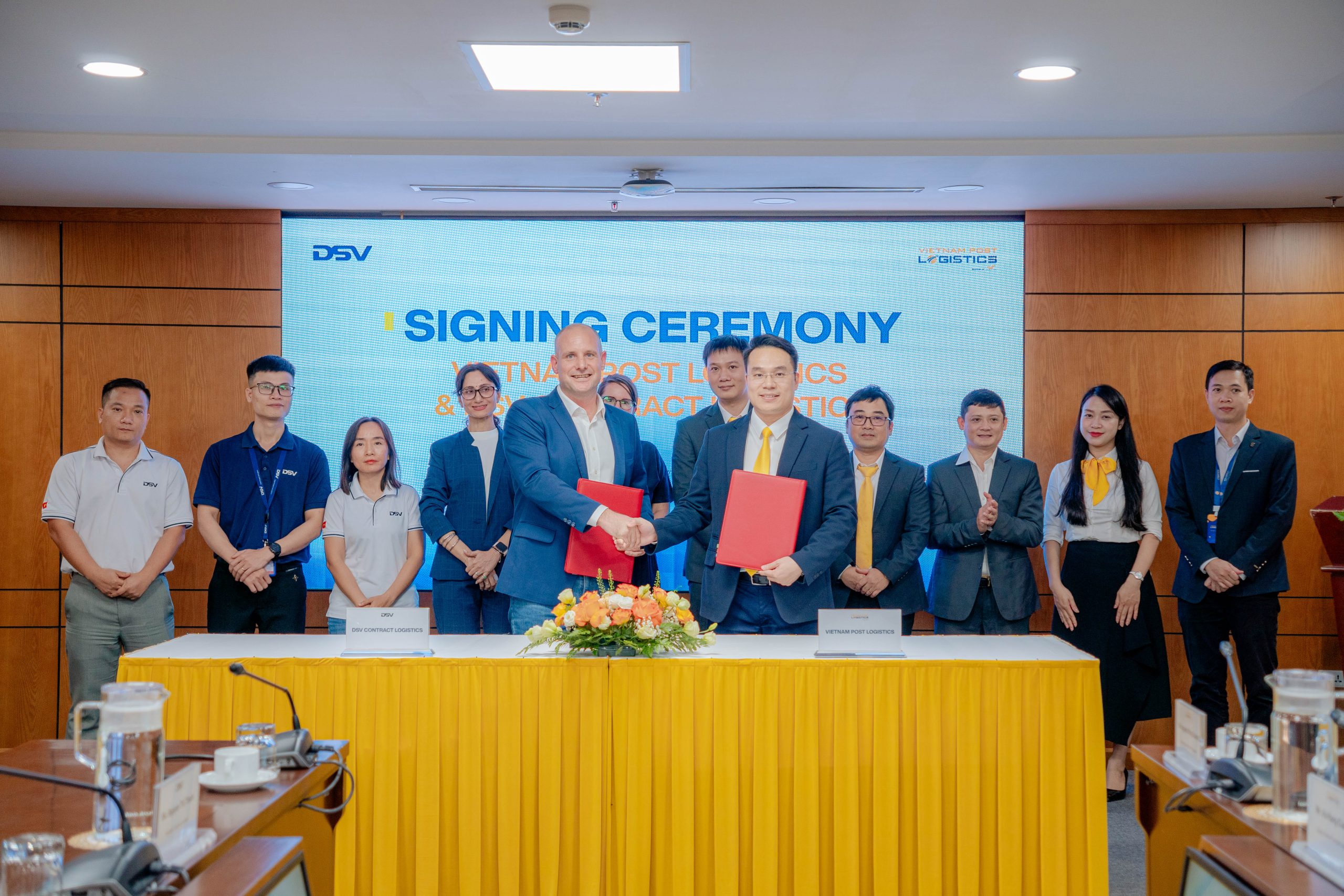
A Strategic Handshake Between Vietnam Post Logistics and DSV Contract Logistics (Vietnam): Pioneering the Future of B2B Supply Chains
On the afternoon of July 13, 2026, the Principal Contract Renewal Ceremony between Vietnam Post Logistics and DSV Contract Logistics (Vietnam) officially took place in a distinguished and proud atmosphere. This event attracted special attention, not only because of the scale of the two enterprises but also due to the profound impact of this partnership […]
11 June, 2026
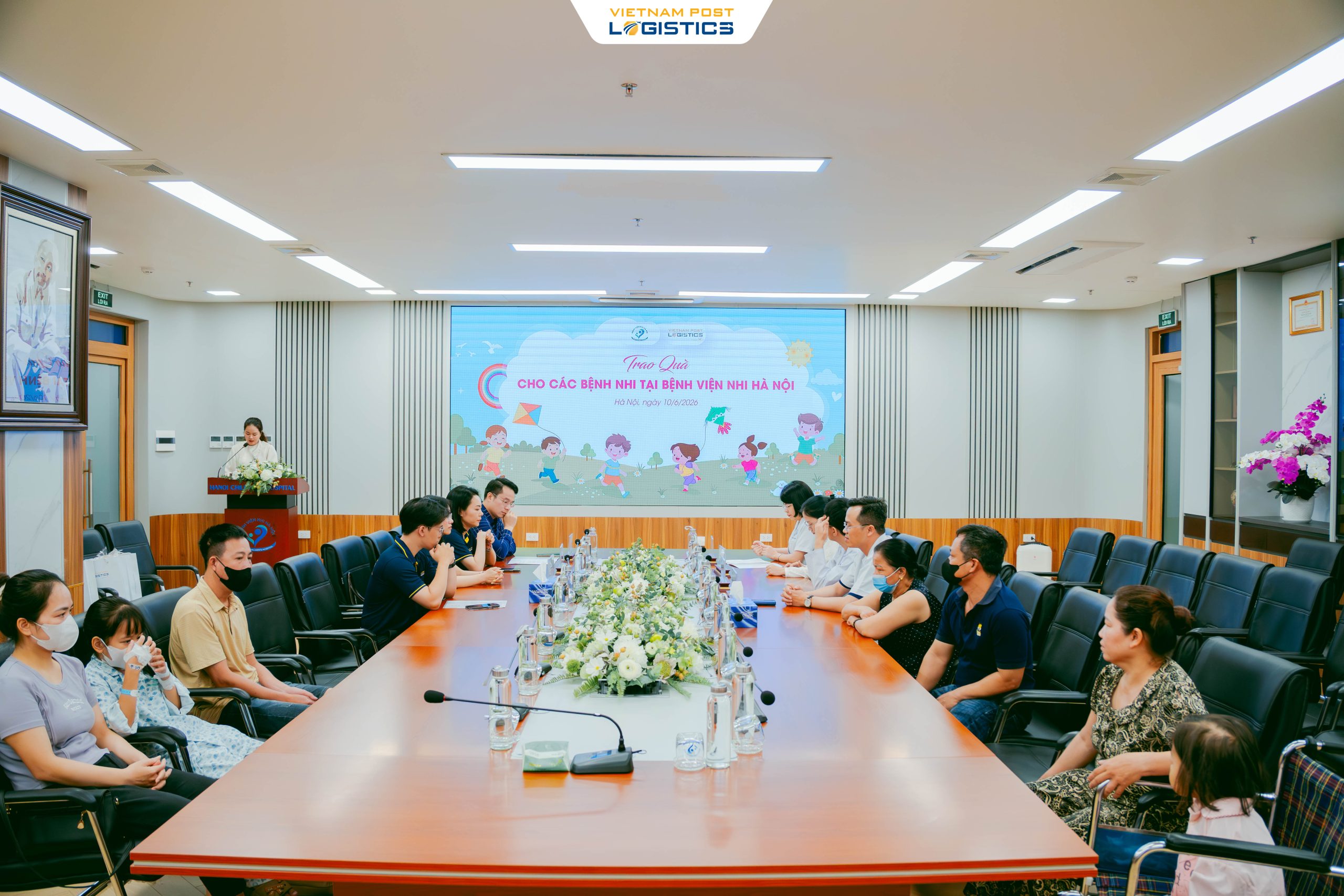
Vietnam Post Logistics Shares Love and Support with Pediatric Patients at Hanoi Children’s Hospital
In response to the Action Month for Children, representatives from the leadership and trade union of Vietnam Post Logistics recently paid a meaningful visit to Hanoi Children’s Hospital. The delegation extended encouragement and presented heartfelt gifts to young patients facing extremely difficult circumstances. This practical initiative is part of the company’s sustainable Corporate Social Responsibility […]