

.svg)




Air Freight to the EU in 2026: Mastering ICS2 Compliance and 5 Tips for Air Cargo Cost Optimization
 Vietnam Post Logistics
 31 May, 2026
 5 phút đọc
Europe has long established itself as one of the most traditional, high-standard, and value-generating trade partners for Vietnamese exporting enterprises. For sectors governed by compressed timelines and high profit margins—such as telecommunications components, semiconductor chips, industrial project samples, or premium agricultural products—utilizing an international air freight to EU service is more than a transport method; it is the critical lifeblood that determines the success of international commercial contracts.
However, entering 2026, the air corridors connecting Vietnam (Noi Bai International Airport – HAN, Tan Son Nhat International Airport – SGN) to primary European Union (EU) gateways are experiencing profound regulatory and financial shifts. Staying ahead of digital security compliance frameworks and changing air tariff structures is a prerequisite for shippers looking to maintain control over their European supply chains.
Primary Bottlenecks in the Vietnam-EU Air Cargo Lane
The European market in 2026 presents rigorous tests regarding both upfront digital compliance and terminal-end handling velocities at destination airports.
The ICS2 Digital Security Compliance Barrier
The European Union has fully implemented the next generation of its Import Control System (ICS2) for all air cargo corridors. This framework mandates that comprehensive Entry Summary Declaration (ENS) data matrices must be electronically transmitted to the customs authorities of the first EU member state entry point before the cargo is physically loaded onto the aircraft at Vietnam origins.
The most common compliance failure for Vietnamese shippers lies in data precision. The system requires an exact 6-digit Harmonized System (HS) code paired with the precise Economic Operators Registration and Identification (EORI) number of the European consignee. Minor typographical errors, mismatched corporate data, or vague cargo descriptions (such as stating “General Cargo” instead of explicit definitions like “Electronic Components”) will automatically trigger a “Do Not Load” directive from the EU central hub. Affected cargo must then be broken down from its flight pallets at Vietnam terminals for validation, resulting in severe transit delays and structural damage to brand reputation.
The Financial Pressure of Green Energy Surcharges (ETS & SAF)
In 2026, the EU has tightened its aviation decarbonization roadmap by uniformly applying the Emissions Trading System (ETS) and mandatory Sustainable Aviation Fuel (SAF) blend ratios for all commercial flights traversing EU airspace.
Because SAF manufacturing costs remain 2 to 3 times higher than conventional conventional jet fuel, air carriers integrate these ecological overheads into shipper invoices as distinct green surcharges. This regulatory shift has driven base air freight structures to Europe up by an average of 12% to 18%, presenting a significant budgetary challenge for high-volume air cargo owners.
Terminal Gridlocks at Core European Gateways
Primary European gateway hubs—including Frankfurt (FRA), Paris Charles de Gaulle (CDG), and Amsterdam Schiphol (AMS)—frequently experience cargo terminal congestion during peak seasons and weekends.
If the documentation accompanying an air shipment contains discrepancies that prevent automated customs release, the consignment is immediately transferred to isolated terminal storage zones. Once delayed, airport warehouse storage fees at hubs like Frankfurt accumulate progressively by the hour in Euros, generating thousands of dollars in accessorial expenses within a few days of bureaucratic delays.
Tactical Alternative Routing and ULD Optimization
To bypass primary hub congestion and maximize internal cargo capacity to lower per-kilogram costs, experienced logistics planners deploy strategic routing and packing techniques:
Leveraging Alternative Gateway Hubs
Instead of steering cargo directly into saturated core airports like Frankfurt or Paris, a highly effective strategy is routing flights to specialized, cargo-centric European airports, most notably Liège (LGG) in Belgium or Luxembourg (LUX).
These airports feature optimized customs processing frameworks where freight terminal release times average only 4 to 6 hours (compared to 24+ hours at FRA). Following clearance, cargo is seamlessly transferred into the European Road Feeder Service (RFS) network—an overnight bonded trucking infrastructure—to deliver cargo directly to recipient warehouses across Germany, France, and the Netherlands, saving 10% to 15% in total logistics spend.
High-Precision Unit Load Device (ULD) Pallet Building
International air freight utilizes standardized Unit Load Devices (ULDs) such as PMC or PAG structural pallets and aviation containers.
During factory packaging phases, shippers should calculate carton dimensions to ensure that when stacked onto wooden pallets, they form a perfectly square, uniform block without structural protrusions or internal voids. Standardized, flush cargo configurations maximize the utilization of main-deck or lower-deck configurations on large freighter aircraft (such as B747F and B777F), qualifying the shipper for the highest wholesale volume discounts from the carrier.
Strict Cold Chain Protocols for Perishables Bound for the EU
For Vietnamese agricultural exporters using air transport to move highly perishable goods—such as lychees, passionfruit, cut flowers, or fresh seafood—to the EU, temperature uniformity and speed are critical.
Factory-Level Pre-Cooling and Thermal Barrier Packaging
The cold chain preservation cycle must be activated directly at the production facility. Immediately following harvest and mandatory phytosanitary inspections, goods must enter specialized pre-cooling chambers to drop the core product temperature to its target baseline.
During final packaging, exporters must utilize high-grade insulated Styrofoam casings reinforced with protective-wrapped dry ice or gel packs. This maintains internal thermal stability and prevents melting gel or condensation from degrading the integrity of outer corrugated cartons, which could pose a risk to the aircraft’s electrical and avionics compartments.
Closed-Loop Air Cargo Terminal Operations
Upon refrigerated truck arrival at Vietnam export terminals, shippers must immediately register for priority handling and temporary storage within airport Cool Rooms (typically maintained at 2°C to 8°C for horticultural cargo and below 0°C for seafood).
The operational workflow from mandatory aviation security scanning (X-ray) to final assembly on a temperature-controlled ULD must be executed rapidly to minimize tarmac thermal exposure. Partnering with air carriers that operate specialized cool-chain care products guarantees that active climate-controlled containers remain powered across intercontinental flight paths.
Deconstructing Air Freight Surcharge Frameworks and Weight Breaks
To maintain negotiation leverage with international freight forwarders and secure competitive rates, export managers must evaluate the specific financial line items that constitute an air freight invoice.
Line-Item Air Surcharge Dissection
A professional air freight quote to Europe is never presented as a single flat rate. It comprises multiple distinct variables that shippers should require forwarders to itemize to avoid hidden costs:
- Air Freight Charge (Pure Freight): Evaluated strictly per kilogram of the shipment’s verified Chargeable Weight.
- Fuel Surcharge (FSC): A fluid variable indexed directly against global energy market fluctuations.
- Security Surcharge (SSC): A mandatory security fee levied by airport authorities.
- Screening / X-ray Fee: Terminal charges for explosive detection and safety screening executed at origin cargo warehouses (TCS/SCSC/ACSV).
- AWB Fee / Documentation Fee: Administrative costs for generating the Master and House Air Waybills.
Capitalizing on Volume Weight Breaks
The international IATA pricing structure for air cargo to the EU escalates downward based on standardized weight break tiers: +45kg, +100kg, +300kg, +500kg, and +1000kg. The operational rule remains: the higher the volume tier, the lower the per-kilogram rate.
If an enterprise generates multiple small shipments targeting the same European destination zone within a single week, avoiding separate small-scale entries prevents high baseline pricing. Utilizing a cargo consolidation model allows shippers to merge individual air orders under a single unified Master Air Waybill, securing the preferred +1000kg wholesale bracket and saving hundreds of dollars per transit corridor.
Vietnam Post Logistics: End-to-End European Air Cargo Infrastructure
Navigating volatile air freight markets and stringent digital security frameworks requires an experienced logistics partner. Vietnam Post Logistics delivers a comprehensive air freight infrastructure engineered to safeguard your European supply chain:
- Guaranteed Space via Institutional BSAs: Through long-term Block Space Agreements (BSA) established with premier international air carriers possessing extensive European line-haul networks (including Qatar Airways, Emirates, Singapore Airlines, and Vietnam Airlines), Vietnam Post Logistics guarantees fixed weekly slot allocations, removing off-loading risks during peak export periods.
- Optimized Transits with Pre-Clearance Support: We provide flexible flight schedules maintaining average airport-to-airport transits of 3 to 5 business days. Our documentation specialists execute proactive customs pre-clearance protocols for destinations like Germany and France, preparing the cargo for rapid door-to-door last-mile distribution.
- Transparent Pricing and Zero Hidden Costs: We maintain competitive tariff structures for air freight to the EU. All ecological overheads and green energy surcharges (EU ETS, SAF) are detailed upfront within our primary quotation matrices, allowing enterprises to manage landed costs accurately without destination billing surprises.
- Expert Compliance and Customs Teams: Backed by extensive experience managing complex commodities, the specialized teams at Vietnam Post Logistics verify that HS codes, EORI data, Lithium battery certifications, and ENS transmissions are fully compliant, ensuring smooth customs processing at destination gateways.
Successfully navigating the European air cargo corridor in 2026 requires speed, data accuracy, and operational optimization. By proactive management of packaging layouts, a clear understanding of ICS2 digital security rules, careful handling of cold chain shipments, and choosing an established logistics partner, enterprises can confidently overcome regulatory barriers and expand their market presence in Europe.
Có thể bạn sẽ thích?
Bài viết liên quan
6 August, 2026
Hai Phong Yard Rental Service & Technical Standards Enterprises Need to Know
Currently, concerns about flooding during the stormy season, expensive DEM/DET penalty fees, and the shortage of standard off-dock buffer yards are creating immense pressure on the supply chain in Hai Phong. Perfectly meeting these strict requirements, the Hai Phong yard rental service by Vietnam Post Logistics provides a vast open yard space, high load-bearing foundation, […]

6 August, 2026
OPTIMAL SOLUTIONS FOR CONTAINER AND OPEN YARD STORAGE COSTS AT HAI PHONG GATEWAY
In the supply chain management problem at the Hai Phong gateway, choosing the wrong storage infrastructure can turn a profitable shipment into a loss due to storage fees. With main port yards constantly overloaded and indoor warehouses limited by both load capacity and height, the Off-Dock Open Yard model emerges as a perfect alternative solution. […]
15 July, 2026
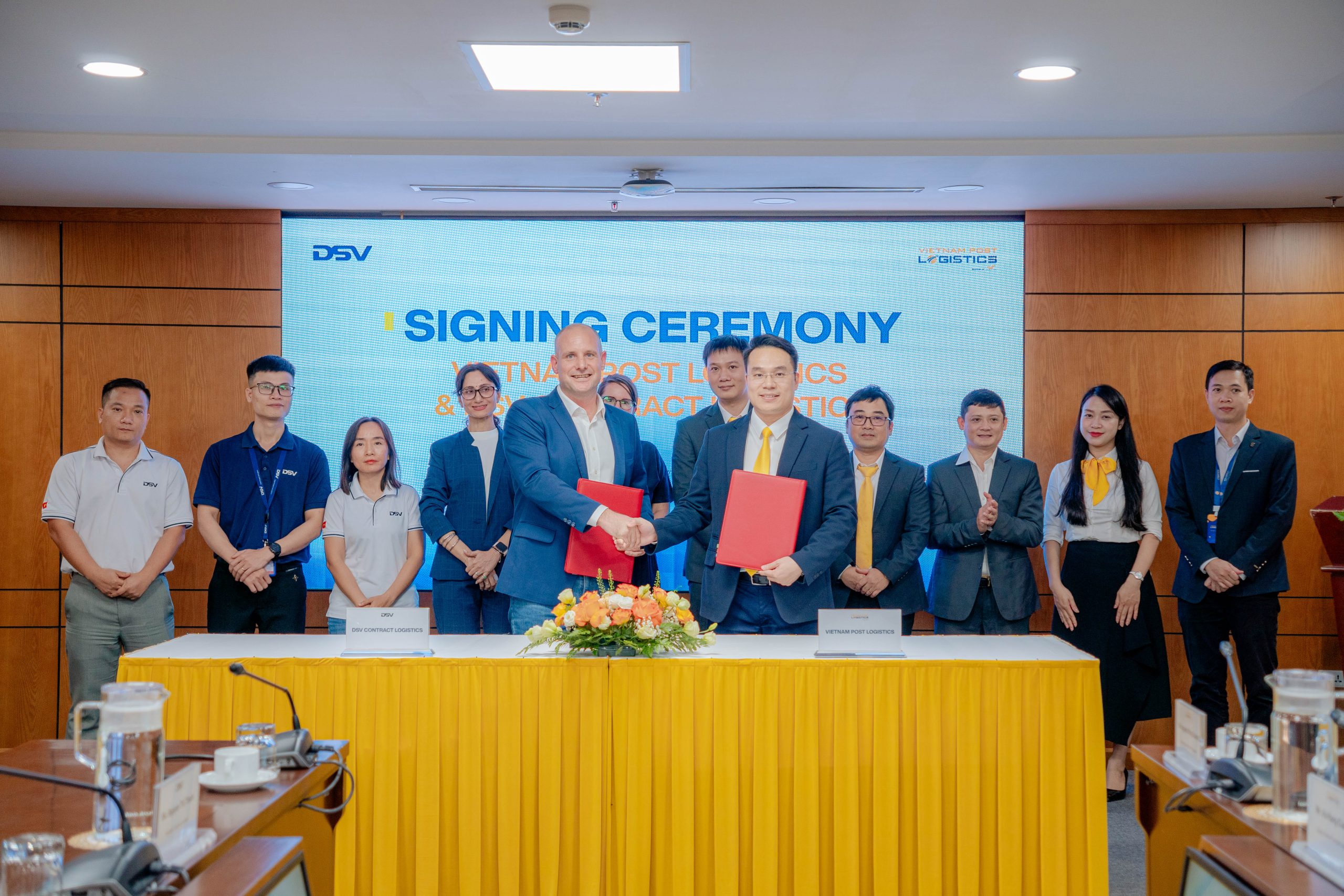
A Strategic Handshake Between Vietnam Post Logistics and DSV Contract Logistics (Vietnam): Pioneering the Future of B2B Supply Chains
On the afternoon of July 13, 2026, the Principal Contract Renewal Ceremony between Vietnam Post Logistics and DSV Contract Logistics (Vietnam) officially took place in a distinguished and proud atmosphere. This event attracted special attention, not only because of the scale of the two enterprises but also due to the profound impact of this partnership […]

11 June, 2026
Vietnam Post Logistics Shares Love and Support with Pediatric Patients at Hanoi Children’s Hospital
In response to the Action Month for Children, representatives from the leadership and trade union of Vietnam Post Logistics recently paid a meaningful visit to Hanoi Children’s Hospital. The delegation extended encouragement and presented heartfelt gifts to young patients facing extremely difficult circumstances. This practical initiative is part of the company’s sustainable Corporate Social Responsibility […]
31 May, 2026
International Air Freight Service in 2026: Cost Volatility and Strategic Space Optimization Solutions
Within modern supply chain frameworks, utilizing an international air freight service is no longer a luxury fallback reserved exclusively for emergencies. For industries characterized by rapid product lifecycles and high-value commodities—such as semiconductor chips, electronics, fast-fashion apparel, and perishable agricultural products—air cargo represents the critical circulatory system that sustains cross-border operational viability. However, global air […]
31 May, 2026
FCL Shipping to the US in 2026: Specialized Logistics Solutions for Garments and Electronics
Within Vietnam’s export architecture in 2026, the United States firmly maintains its position as the premier consumer market for the garment, footwear, and electronics sectors. However, this trade lane also presents the highest level of complexity regarding security regulations and cost volatility. As geopolitical conflicts alter the configurations of global ocean carrier alliances and pressure […]
31 May, 2026
T11 T01 Customs Clearance: Official E-commerce Shipping Solution to the US by Vietnam Post Logistics
In the context of increasingly stringent import regulations in the United States market, choosing the appropriate customs declaration method is vital to the sustainable development of exporting enterprises. Notably, since September 2025, U.S. Customs and Border Protection (CBP) has officially eliminated the application of the duty-free Entry Type 86 (T86) customs clearance form and transitioned […]