

.svg)




International Air Freight Service in 2026: Cost Volatility and Strategic Space Optimization Solutions
 Vietnam Post Logistics
 31 May, 2026
 5 phút đọc
Within modern supply chain frameworks, utilizing an international air freight service is no longer a luxury fallback reserved exclusively for emergencies. For industries characterized by rapid product lifecycles and high-value commodities—such as semiconductor chips, electronics, fast-fashion apparel, and perishable agricultural products—air cargo represents the critical circulatory system that sustains cross-border operational viability.
However, global air corridors are experiencing profound structural shifts in both cost metrics and operational dynamics. To remain resilient against sudden market fluctuations, enterprises must develop a comprehensive understanding of current market realities and implement sophisticated risk-management strategies.
The 2026 Air Freight Market Barometer: Disruptions Redefining the Industry
The global air cargo market operates under significant pressure, driven by maritime geopolitical constraints and rapidly shifting consumer demand patterns.
The Ocean-to-Air Modal Shift
Prolonged conflicts along critical international maritime straits have forced ocean vessels to execute lengthy diversions, extending sea freight transit times to 40–45 days. Consequently, a substantial volume of time-sensitive cargo originally allocated for ocean transport has shifted to air corridors to meet strict contractual delivery windows. This abrupt modal migration has placed unprecedented pressure on aircraft belly capacity and main-deck space allocations, particularly on long-haul routes targeting the United States and Europe.
Jet Fuel Cost Pressures and Sustainable Aviation Fuel (SAF) Mandates
Jet fuel pricing remains consistently elevated. Furthermore, global aviation alliances are strictly enforcing carbon-reduction roadmaps, requiring commercial flights to integrate a mandatory percentage of Sustainable Aviation Fuel (SAF). These environmental mandates have driven airline base operating costs up by 15% to 20%. As a direct result, shippers must absorb volatile Fuel Surcharges (FSC) that undergo weekly index adjustments.
The Gridlock for Allocation Space at Transshipment Hubs
During peak shipping seasons, the threat of “off-loading”—where cargo is held at a transit airport due to capacity overloads—presents a severe operational risk for exporters. US or EU-bound shipments that utilize multi-leg transit routes via major Asian or Middle Eastern hubs (such as Singapore, Incheon, or Dubai) face localized transit delays of 3 to 5 days if the logistics provider lacks firm allocation commitments from the operating airlines.
Cost Optimization: Mastering IATA Chargeable Weight Regulations
To proactively manage an air freight budget, air cargo owners must master the international pricing mechanisms enforced by commercial carriers. Airfreight pricing is determined not merely by the physical mass of the cargo, but by the total physical footprint the consignment occupies within the aircraft’s Unit Load Devices (ULD).
The International Air Transport Association (IATA) mandates that the Chargeable Weight of an air shipment is determined by selecting the higher value between the Gross Weight (actual weight) and the Volumetric Weight (dimensional weight), calculated using the standard international formula:

When exporting high-density, compact commodities like semiconductor components or metallic hardware, freight costs are typically evaluated against the Gross Weight. However, for low-density, high-volume products such as boxed apparel, footwear, or insulated equipment casings, the Volumetric Weight often exceeds physical mass significantly.
Strategic Packaging Solutions
To eliminate unnecessary dimensional weight charges, enterprises must optimize carton sizing, eradicate internal structural voids, and deploy industrial vacuum-packaging techniques for textiles. Aligning volumetric profiles with actual gross weight prevents enterprises from paying premium rates for unutilized space.
Operational Profiles of Three Strategic Air Corridors from Vietnam
Each geographic flight corridor operates under distinct regulatory parameters and logistical constraints that exporting enterprises must navigate to secure seamless customs processing:
The United States (USA) Route
The Trans-Pacific air corridor maintains some of the most stringent aviation security protocols globally. Shipments containing Lithium-ion batteries (such as consumer electronics, smart devices, and power banks) must undergo rigorous dangerous goods (DG) testing, certification, and specialized labeling in strict compliance with IATA Dangerous Goods Regulations. Ideal air transit times to primary US gateway hubs like Los Angeles (LAX) or New York (JFK) range from 3 to 5 business days, provided compliance protocols are verified at origin.
The European Union (EU) Route
The EU enforces advanced customs compliance via the second generation of its Import Control System (ICS2). This regulatory framework requires complete and accurate air cargo security data, including precise Harmonized System (HS) codes, to be electronically transmitted and approved prior to aircraft departure from Vietnam. Any data discrepancy on the Air Waybill (AWB) can trigger immediate security holds upon arrival at entry gateways like Frankfurt or Paris, resulting in costly, hourly airport terminal storage fees.
The Intra-Asia and China Route
Unlike long-haul Western corridors, the Intra-Asia shipping lane operates as a high-velocity supply chain corridor designed to feed Just-In-Time (JIT) manufacturing ecosystems. Product lifecycles along this route are evaluated in hours rather than days. Success along this corridor depends on high daily flight frequencies and the logistics provider’s capacity to execute customs release and terminal breakdown within a 24-to-48-hour operational window at major industrial airports such as Guangzhou, Shenzhen, or Shanghai.
Vietnam Post Logistics: Ensuring Safety in Global Air Supply Chains
Amid volatile market dynamics, modern enterprises require a well-established logistics partner to safeguard their international distribution pipelines. Vietnam Post Logistics delivers a comprehensive air freight infrastructure engineered to resolve complex cargo challenges:
-
Guaranteed Space Allocations via BSA: Through long-term Block Space Agreements (BSA) secured with leading international commercial airlines and cargo freighters, Vietnam Post Logistics guarantees stable capacity allocations for clients, eliminating off-loading risks even during peak export seasons.
-
Optimized Tariff Structures: Leveraging high-volume daily consolidations, we maintain strong negotiation leverage with international carriers to provide optimal freight rates across all weight breaks, protecting our clients’ operating margins.
-
Comprehensive International Documentation Management: Our specialized compliance teams review and manage all international customs data elements, including HS code alignment, Lithium battery safety declarations, and European ENS filings, ensuring smooth customs processing at destination gateways.
-
Global Last-Mile Distribution Networks: Operating alongside certified partners in the US, EU, and China, Vietnam Post Logistics provides end-to-end door-to-door solutions. Every segment of the transport pipeline is fully transparent, managed via an online 24/7 tracking platform.
Succeeding in the global air cargo market requires data precision, compliant packaging methodologies, and strategic alignment with an experienced logistics partner. Developing an adaptable supply chain structure allows enterprises to navigate international trade demands effectively. With robust operational capabilities and an established global network, Vietnam Post Logistics serves as a reliable partner, helping enterprises move high-value cargo quickly, safely, and cost-effectively.
Bài viết liên quan
10 October, 2026
Southern Trucking Services: Relieving Peak Season Port and Airport Congestion
As the year-end peak season approaches, trading activity across Southern Vietnam’s key economic zone reaches record levels. Major seaport complexes like Cat Lai and Cai Mep – Thi Vai, alongside key air cargo gateways in the Ho Chi Minh City area, experience heavy inbound cargo flows to supply holiday production and distribution networks. However, revenue […]

10 October, 2026
Top 4 Trusted Warehousing Services in Nghe An (2026 Guide)
10 October, 2026
Top 4 Trusted Warehousing Services in Nghe An (2026 Guide)
The surge in Foreign Direct Investment (FDI) and the ongoing industrial shift in North Central Vietnam are rapidly transforming Nghe An into a key regional logistics hub. For major manufacturing, trading, and distribution enterprises (Key Accounts/FDI clients), finding a reputable provider of warehousing services in Nghe An with high technical standards to serve as a […]
4 October, 2026
Warehouse Rental in Nghe An: Strategic Solutions for Enterprise Supply Chains 2026
The surge in foreign direct investment (FDI) and manufacturing activity across North Central Vietnam is driving a strong demand among enterprise clients for large-scale storage space. However, finding a reliable warehouse rental in Nghe An that satisfies rigorous technical standards, offers optimal transportation connectivity, and provides professional operational capabilities to serve as a regional distribution […]
6 August, 2026
Hai Phong Yard Rental Service & Technical Standards Enterprises Need to Know
Currently, concerns about flooding during the stormy season, expensive DEM/DET penalty fees, and the shortage of standard off-dock buffer yards are creating immense pressure on the supply chain in Hai Phong. Perfectly meeting these strict requirements, the Hai Phong yard rental service by Vietnam Post Logistics provides a vast open yard space, high load-bearing foundation, […]
6 August, 2026
OPTIMAL SOLUTIONS FOR CONTAINER AND OPEN YARD STORAGE COSTS AT HAI PHONG GATEWAY
In the supply chain management problem at the Hai Phong gateway, choosing the wrong storage infrastructure can turn a profitable shipment into a loss due to storage fees. With main port yards constantly overloaded and indoor warehouses limited by both load capacity and height, the Off-Dock Open Yard model emerges as a perfect alternative solution. […]
15 July, 2026
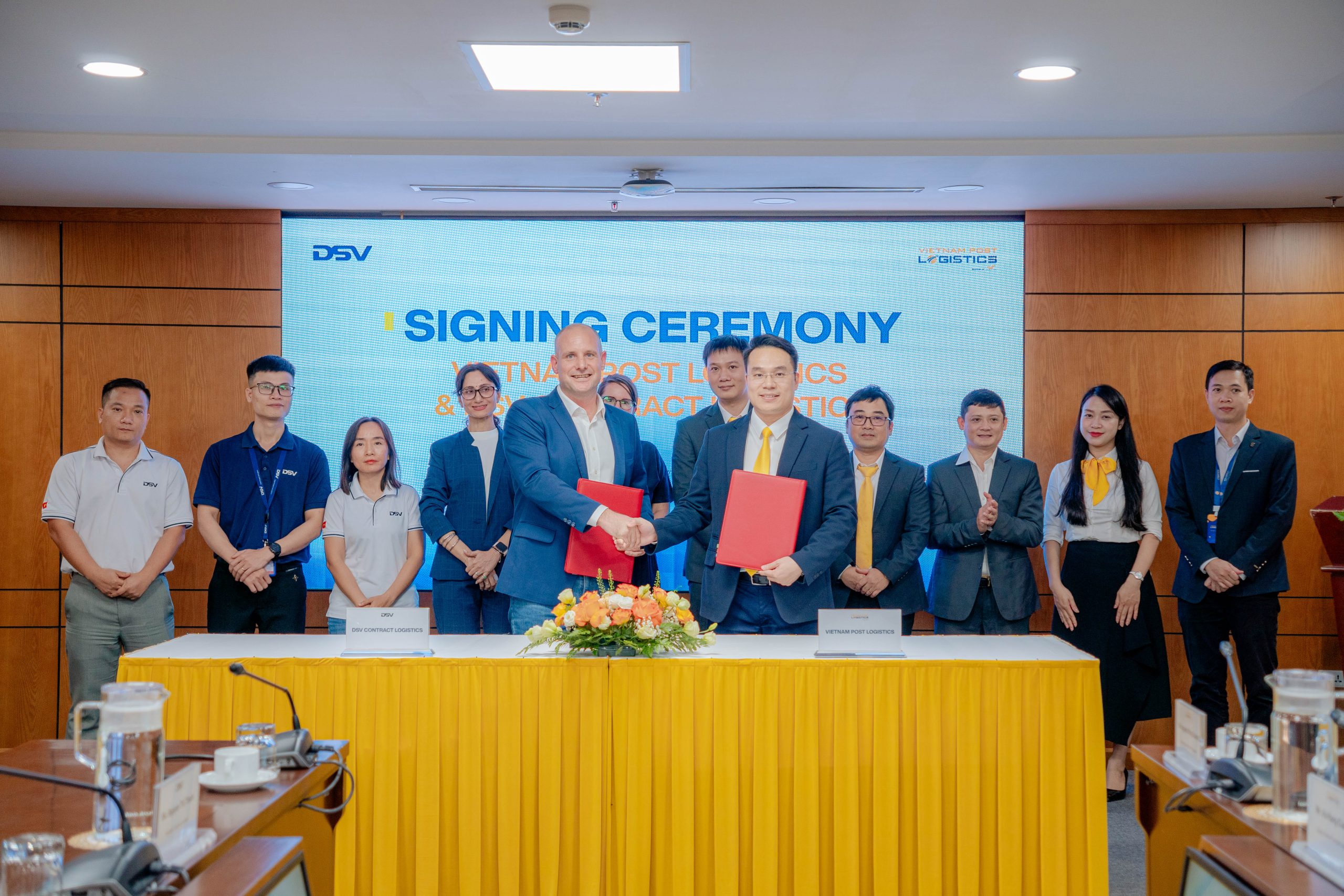
A Strategic Handshake Between Vietnam Post Logistics and DSV Contract Logistics (Vietnam): Pioneering the Future of B2B Supply Chains
On the afternoon of July 13, 2026, the Principal Contract Renewal Ceremony between Vietnam Post Logistics and DSV Contract Logistics (Vietnam) officially took place in a distinguished and proud atmosphere. This event attracted special attention, not only because of the scale of the two enterprises but also due to the profound impact of this partnership […]

11 June, 2026
Vietnam Post Logistics Shares Love and Support with Pediatric Patients at Hanoi Children’s Hospital
In response to the Action Month for Children, representatives from the leadership and trade union of Vietnam Post Logistics recently paid a meaningful visit to Hanoi Children’s Hospital. The delegation extended encouragement and presented heartfelt gifts to young patients facing extremely difficult circumstances. This practical initiative is part of the company’s sustainable Corporate Social Responsibility […]