

.svg)




FCL Shipping to the US in 2026: Specialized Logistics Solutions for Garments and Electronics
 Vietnam Post Logistics
 31 May, 2026
 5 phút đọc
Within Vietnam’s export architecture in 2026, the United States firmly maintains its position as the premier consumer market for the garment, footwear, and electronics sectors. However, this trade lane also presents the highest level of complexity regarding security regulations and cost volatility. As geopolitical conflicts alter the configurations of global ocean carrier alliances and pressure from the Customs-Trade Partnership Against Terrorism (C-TPAT) continues to intensify, executing FCL shipping to US successfully requires far more than merely securing a competitive freight rate. Today, it demands a highly transparent logistics strategy paired with proactive risk mitigation frameworks.
This comprehensive analysis examines the operational realities of the Vietnam–US shipping lane in 2026 and provides a strategic roadmap designed to help FCL shippers optimize their supply chains in the American market.
The Landscape of Trans-Pacific Ocean Freight in 2026: Volatility and Structural Shifts
The Trans-Pacific maritime transport market entering 2026 has transitioned away from historic stabilities. Instead, enterprises face a logistics environment defined by systemic challenges, forcing FCL exporters to pivot their primary mindset from “lowest-cost procurement” to “stability and risk management”.
Route Diversions and the Transit Time Dilemma
The historical correlation between maritime transit times and ocean freight budgets is facing disruptions due to critical geopolitical and environmental variables. As the Panama Canal continues to operate under strict draft restrictions driven by climate change, a massive wave of cargo diversion from the US West Coast to the US East Coast (USEC) has emerged.
- Gateway Congestion: Primary destination gateways such as Savannah and New York recorded a sharp 12% surge in cargo volumes during the first quarter of 2026. This influx has resulted in localized berth congestion and extended terminal delays.
- Alternative Routing Challenges: To bypass these bottlenecks and secure predictable schedules, multiple ocean carrier alliances have chosen to reroute USEC-bound vessels around the Cape of Good Hope.
- Schedule Reliability: This diversion automatically extends the maritime journey by an additional 10 to 14 days. Consequently, global schedule reliability has dropped to a threshold of 52.4%, marking its lowest level in three years.
Escalating Freight Indices and the Emergence of Green Surcharges
Beyond extended transit times, the profit margins of garment and electronics manufacturers are facing pressure from newly implemented regulatory and operational surcharges.
- Freight Index Benchmarks: Market metrics from May 2026 indicate that FCL freight rates from Cat Lai to Long Beach fluctuate between $4,500 and $5,500 per FEU. Meanwhile, base freight rates for shipments targeting New York have reached a threshold of $7,200 per FEU.
- Green Surcharges: Driven by emission reduction mandates from the International Maritime Organization (IMO) and aggressive environmental laws in states like California, container lines have instituted mandatory carbon offset surcharges ranging from $200 to $450 per container. This is no longer an optional variable but a fixed cost item that shippers must integrate directly into their product cost calculations.
Regulatory Hurdles: UFLPA, C-TPAT, and Clean Supply Chains
The intersection of international logistics and cross-border legal compliance has become more critical than ever. In 2026, the US government enforces rigorous verifications that extend beyond the physical cargo to audit the historical transparency of the entire supply chain.
- The Compliance Impact: For the textile and garment sectors, a lack of transparency in origin documentation or utilizing logistics intermediaries that fail to meet C-TPAT security benchmarks can result in customs holds. Under enforcement mechanisms like the Uyghur Forced Labor Prevention Act (UFLPA), targeted inspection rates can reach 15% to 20%.
- Financial Consequences: Every container delayed for enforcement verification disrupts seasonal inventory timelines and triggers immediate accessorial fees. Demurrage, detention, and intensive exam costs range from $1,500 to $3,000 per container, which can rapidly turn a profitable shipment into a net financial loss within a few days of port detention.
Technical Standards for US-Bound FCL Cargo: Safeguarding Critical Commodities
Across a Trans-Pacific maritime transit lasting anywhere from 25 to 45 days, FCL containers face extreme microclimatic shifts and harsh mechanical stress. Because of these conditions, the US shipping market enforces stringent technical standards that cargo owners must maintain to ensure product integrity and continuous supply chain flow.
Specialized Preservation for Sensitive Product Segments
The variance between a successful cargo delivery and a total insurance loss depends directly on specialized in-container stabilization techniques.
Quy chuẩn đối với hàng May mặc & Giày dép (Garments & Footwear Standards)
- Moisture Control: To counter container sweat caused by extreme ambient temperature fluctuations during long voyages, industry protocols mandate strict humidity control.
- Desiccant Infrastructure: Utilizing certified industrial-grade desiccant bags combined with full Kraft paper lining across the internal container walls is the standard approach to keeping relative humidity below 12%, preventing mold growth.
- Garment on Hanger (GOH): For premium fashion lines, utilizing specialized Garment on Hanger (GOH) container configurations featuring structural rack systems is required. This maintains product form and eliminates the need for post-transit pressing or reconditioning at destination warehouses.
Quy chuẩn đối với hàng Điện tử & Linh kiện (Electronics & Components Standards)
- Physical Stabilization: Electronics constitute the most sensitive cargo segment regarding physical shocks and vibrations. Vanning standards demand advanced cargo securement.
- Dunnage Engineering: Shippers must utilize heavy-duty dunnage systems, including industrial airbags and high-tensile dunnage strapping, to eliminate internal structural voids. The objective is to prevent cargo movement within the container during heavy seas, protecting sensitive circuit boards and microcomponents from structural damage.
International Security and Safety Compliance (C-TPAT)
The US market operates on a foundation of strict border security. Adhering to these security parameters is a fundamental requirement for gaining entry into the country.
- 7-Point Container Inspection: This is a mandatory protocol that must be executed prior to cargo loading to verify that the container’s structure has not been compromised for illicit activities. Shippers must comprehensively audit the floor, ceiling, internal walls, and door assemblies to mitigate hidden security risks.
- High-Security Sealing: Every FCL container targeting the US must be secured with high-security bolt seals that carry official ISO 17712 certification. Correct seal application serves as the primary verification of cargo integrity when evaluated by US Customs and Border Protection (CBP).
Sustainable Packaging Protocols (ISPM 15)
In 2026, the US continues to enforce strict environmental protections to safeguard its domestic ecosystem from invasive pests transported via wooden packaging.
- The ISPM 15 Mandate: All solid wood pallets, crating, and wooden dunnage materials must undergo regulated heat treatment or certified methyl bromide fumigation, bearing the official international IPPC stamp.
- Non-Compliance Penalties: Any violation of ISPM 15 standards typically results in immediate cargo rejection, where CBP mandates the re-exportation of the entire FCL container directly from the terminal pier. This incurs substantial financial penalties and severe supply chain delays for the shipper.
Navigating Regulatory Blind Spots in US Customs: The Critical Nature of AMS and ISF Filings
In the US regulatory framework, documentation inaccuracies cause significant customs delays and lead to direct financial penalties. These filing entry requirements represent a common compliance pitfall for Vietnamese exporters who lack rigid data verification protocols.
Khai báo AMS (Advanced Manifest System) – The 24-Hour Rule
US CBP mandates that comprehensive electronic manifest data must be submitted through the Advanced Manifest System (AMS) at least 24 hours before the FCL cargo is physically loaded onto the vessel at the port of origin, such as Cát Lái or Hải Phòng.
- Operational Risks: Minor discrepancies—such as ambiguous commodity descriptions or mismatched consignee corporate names—will trigger an automated “Do Not Load” directive from CBP.
- Supply Chain Disruption: If an error occurs, the exporter faces unexpected origin storage charges and unavoidable container rollovers, disrupting delivery commitments made to US buyers.
ISF (Importer Security Filing) – The “10+2” Coordination Challenge
While the Importer Security Filing (ISF) remains the legal responsibility of the US Importer of Record, the vast majority of the core data points must be supplied by the exporting entity in Vietnam.
- Strict Penalty Structure: CBP enforces a strict liquidated damages penalty of $5,000 per violation for late, inaccurate, or incomplete ISF filings.
- Intensive Exam Costs: If a container misses the regulatory filing window, it faces a high probability of being held for an Intensive Exam upon arrival at the US port. This subjects the shipper to non-negotiable terminal scanning and storage fees ranging from $1,000 to $3,500 per container.
- Data Synchronization: The primary operational risk stems from data mismatches between the ocean Bill of Lading (BOL) and the submitted ISF data matrix. Conducting cross-system data validation before transmission is essential for securing a seamless “green light” customs release.
Vietnam Post Logistics: Institutional Capability and Supply Chain Resilience
Navigating the volatile 2026 ocean freight market requires an experienced logistics partner. Vietnam Post Logistics serves as a strategic partner, helping enterprises resolve complex operational challenges across long-haul US transport corridors:
- Allocation Security and Guaranteed Space: Through long-term Service Contracts signed with major global ocean carrier alliances, Vietnam Post Logistics guarantees stable space allocations and container equipment availability, even during peak shipping seasons.
- Dedicated Compliance and Documentation Experts: Our specialized documentation teams manage and validate AMS and ISF electronic transmissions with accuracy. Our deep understanding of US customs workflows eliminates documentation penalties and border delays at destination ports.
- Comprehensive 50-State Agent Network: Operating alongside trusted, licensed customs brokerage and logistics networks across all 50 US states, Vietnam Post Logistics delivers seamless door-to-door solutions, ensuring on-time delivery to major distribution centers.
- Compliance Advisory Services: We assist clients in aligned execution regarding C-TPAT security benchmarks, ISPM 15 wood fumigation standards, and commodity-specific packaging requirements for both electronics and garments, ensuring seamless entry into the US market.
- Real-Time Pipeline Visibility: Driven by an advanced online tracking platform, cargo owners gain complete visibility over their FCL containers across the Trans-Pacific transit, allowing for efficient inventory planning and downstream market distribution.
Succeeding in the US market in 2026 requires data precision and proactive risk management. By adhering to technical packaging standards and ensuring synchronized customs filings, enterprises can navigate regulatory challenges effectively. With extensive operational experience and flexible service networks, Vietnam Post Logistics serves as a reliable partner, helping Vietnamese exports meet international trade standards safely and efficiently.
Bài viết liên quan
10 October, 2026
Southern Trucking Services: Relieving Peak Season Port and Airport Congestion
As the year-end peak season approaches, trading activity across Southern Vietnam’s key economic zone reaches record levels. Major seaport complexes like Cat Lai and Cai Mep – Thi Vai, alongside key air cargo gateways in the Ho Chi Minh City area, experience heavy inbound cargo flows to supply holiday production and distribution networks. However, revenue […]

10 October, 2026
Top 4 Trusted Warehousing Services in Nghe An (2026 Guide)
10 October, 2026
Top 4 Trusted Warehousing Services in Nghe An (2026 Guide)
The surge in Foreign Direct Investment (FDI) and the ongoing industrial shift in North Central Vietnam are rapidly transforming Nghe An into a key regional logistics hub. For major manufacturing, trading, and distribution enterprises (Key Accounts/FDI clients), finding a reputable provider of warehousing services in Nghe An with high technical standards to serve as a […]
4 October, 2026
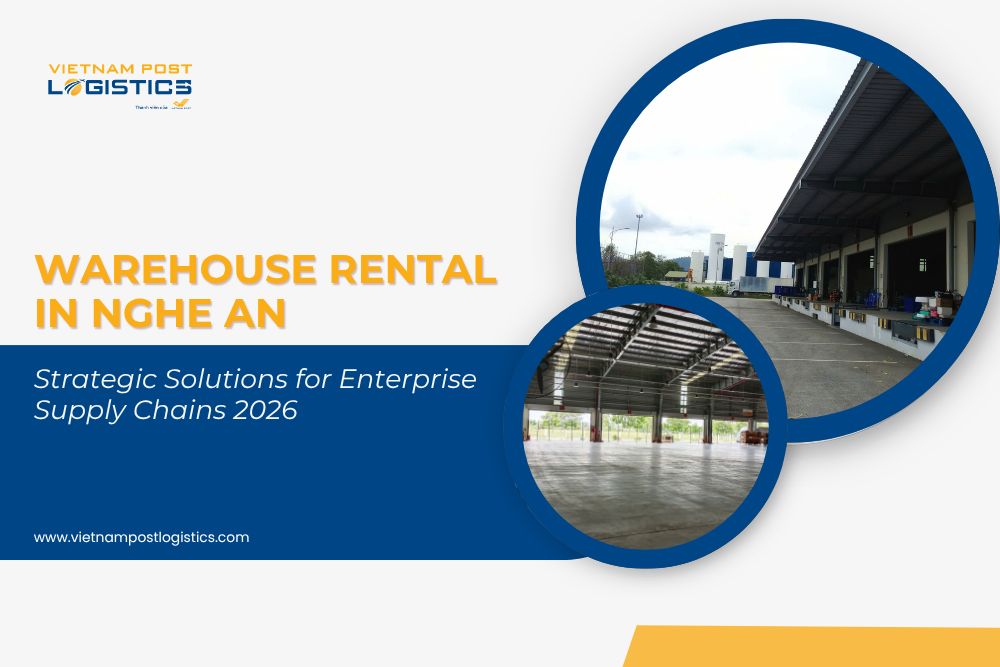
Warehouse Rental in Nghe An: Strategic Solutions for Enterprise Supply Chains 2026
The surge in foreign direct investment (FDI) and manufacturing activity across North Central Vietnam is driving a strong demand among enterprise clients for large-scale storage space. However, finding a reliable warehouse rental in Nghe An that satisfies rigorous technical standards, offers optimal transportation connectivity, and provides professional operational capabilities to serve as a regional distribution […]
6 August, 2026
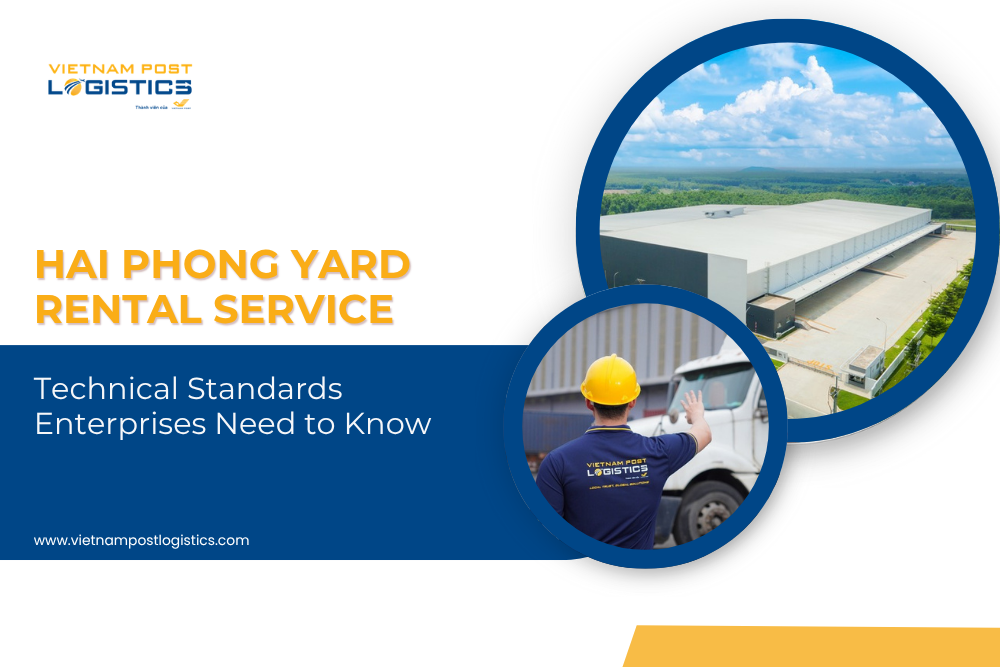
Hai Phong Yard Rental Service & Technical Standards Enterprises Need to Know
Currently, concerns about flooding during the stormy season, expensive DEM/DET penalty fees, and the shortage of standard off-dock buffer yards are creating immense pressure on the supply chain in Hai Phong. Perfectly meeting these strict requirements, the Hai Phong yard rental service by Vietnam Post Logistics provides a vast open yard space, high load-bearing foundation, […]
6 August, 2026
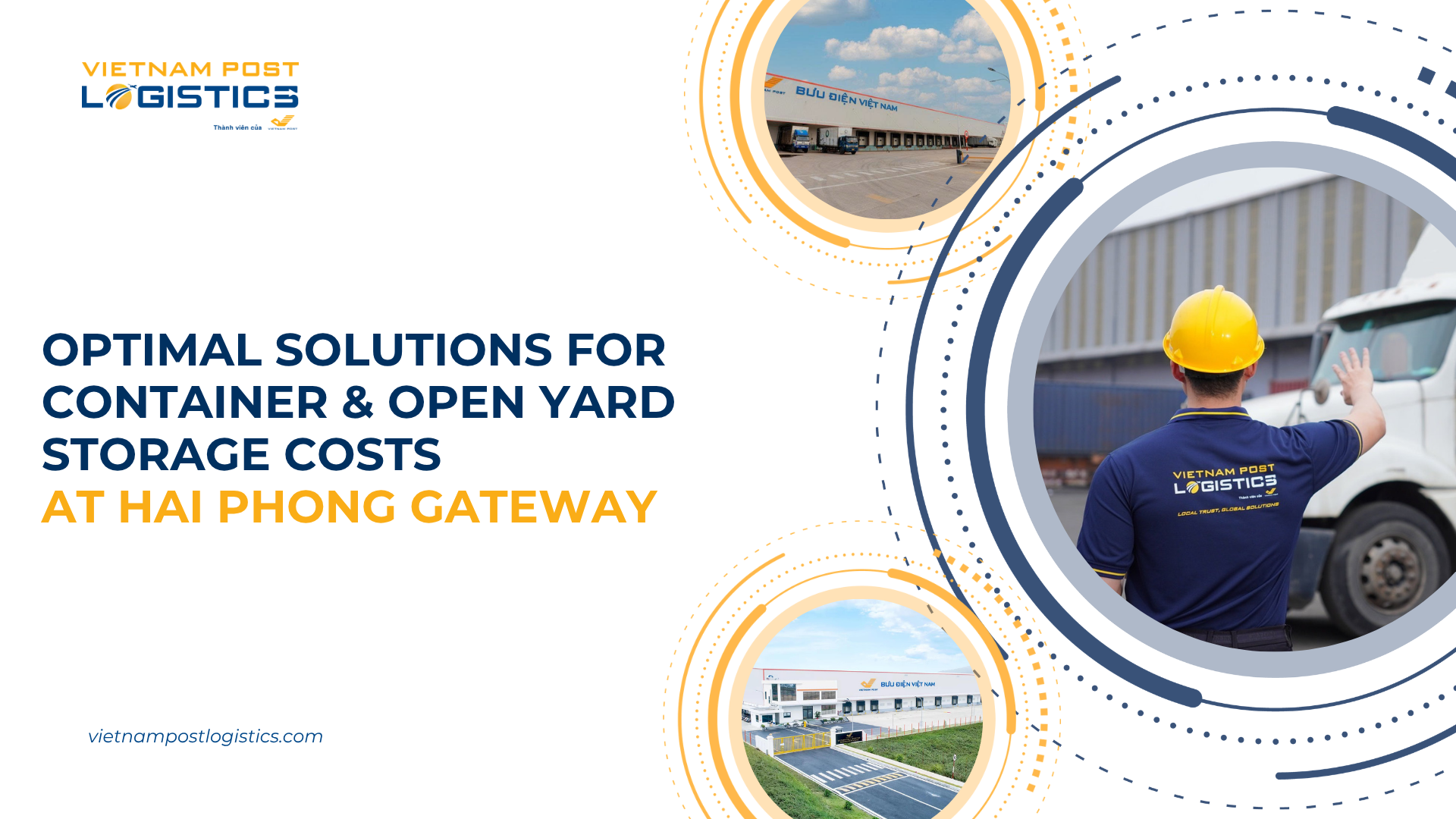
OPTIMAL SOLUTIONS FOR CONTAINER AND OPEN YARD STORAGE COSTS AT HAI PHONG GATEWAY
In the supply chain management problem at the Hai Phong gateway, choosing the wrong storage infrastructure can turn a profitable shipment into a loss due to storage fees. With main port yards constantly overloaded and indoor warehouses limited by both load capacity and height, the Off-Dock Open Yard model emerges as a perfect alternative solution. […]
15 July, 2026
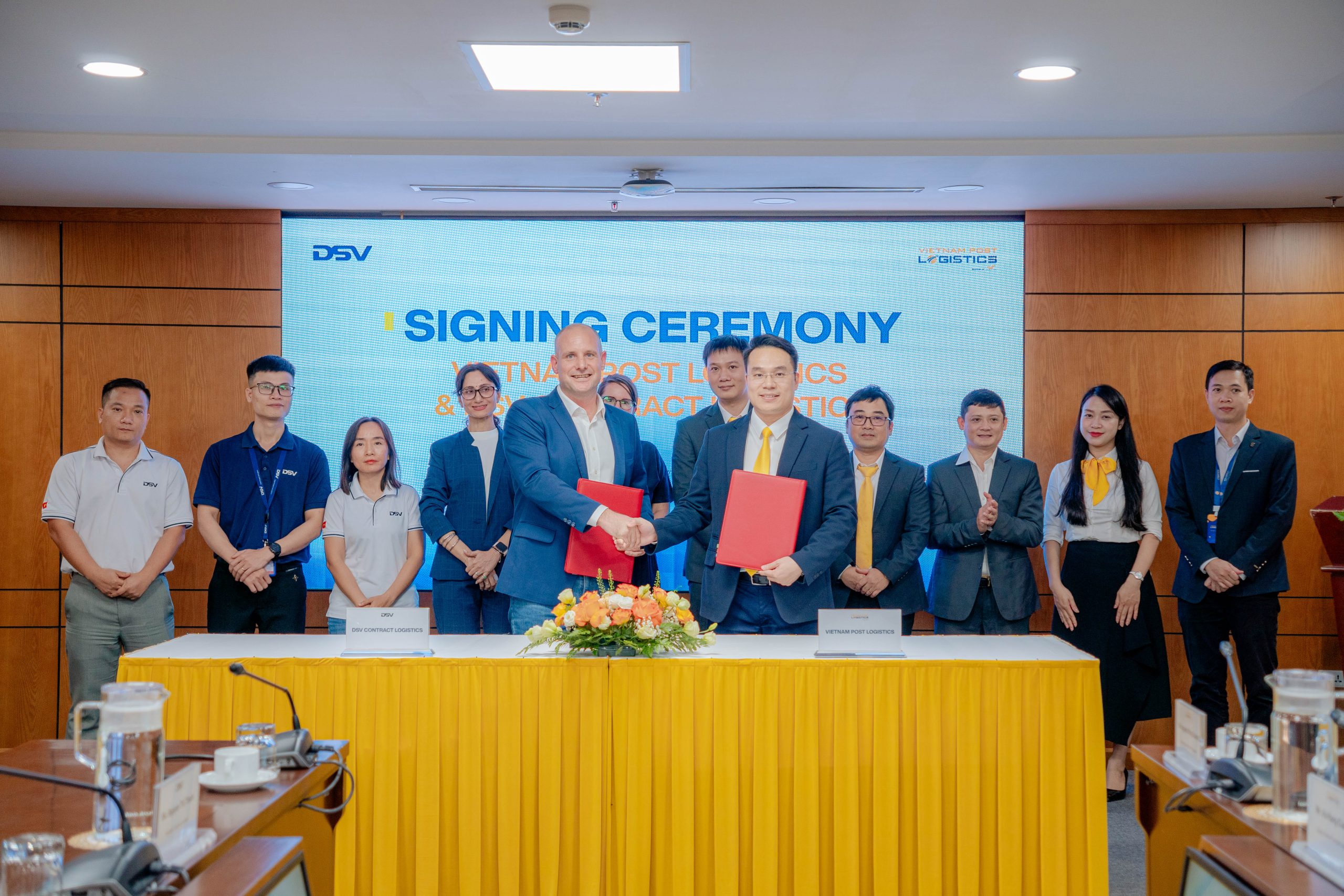
A Strategic Handshake Between Vietnam Post Logistics and DSV Contract Logistics (Vietnam): Pioneering the Future of B2B Supply Chains
On the afternoon of July 13, 2026, the Principal Contract Renewal Ceremony between Vietnam Post Logistics and DSV Contract Logistics (Vietnam) officially took place in a distinguished and proud atmosphere. This event attracted special attention, not only because of the scale of the two enterprises but also due to the profound impact of this partnership […]

11 June, 2026
Vietnam Post Logistics Shares Love and Support with Pediatric Patients at Hanoi Children’s Hospital
In response to the Action Month for Children, representatives from the leadership and trade union of Vietnam Post Logistics recently paid a meaningful visit to Hanoi Children’s Hospital. The delegation extended encouragement and presented heartfelt gifts to young patients facing extremely difficult circumstances. This practical initiative is part of the company’s sustainable Corporate Social Responsibility […]