

.svg)




Vietnam Logistics 2026: A Transformational Turning Point and the Acceleration Puzzle for Enterprises
 Vietnam Post Logistics
 1 April, 2026
 5 phút đọc
In the context of the country consolidating its position as a global manufacturing hub and expanding its consumer economy, domestic supply chains are facing unprecedentedly complex challenges. The acceleration of cross-border trade demands strict timeliness and tight integration across all distribution channels.
The question arises: Will domestic logistics providers develop fast enough to keep up with this rigorous flow?
Vietnam Logistics: The Turning Point and Inevitable Shifts
Structural changes are reshaping the entire demand of the domestic logistics market. As global supply chains increasingly concentrate in Vietnam, industrial manufacturing continues to expand in scale.
This reality drives an urgent need for advanced inbound logistics solutions and global distribution support. Operational processes require deeper specialization to meet the stringent standards of multinational corporations.
Simultaneously, the boom in domestic and cross-border e-commerce is creating immense pressure. Order processing speed, inventory optimization, and returns management have become thorny problems.
More notably, the flow of goods is no longer confined to major cities but has begun to shift strongly toward satellite areas. Local markets are gradually asserting their strategic roles in the overall distribution map.
The rise of the middle class also brings increasingly high expectations for service quality. Businesses are forced to upgrade their supply capabilities while ensuring cost optimization to maintain a competitive advantage.
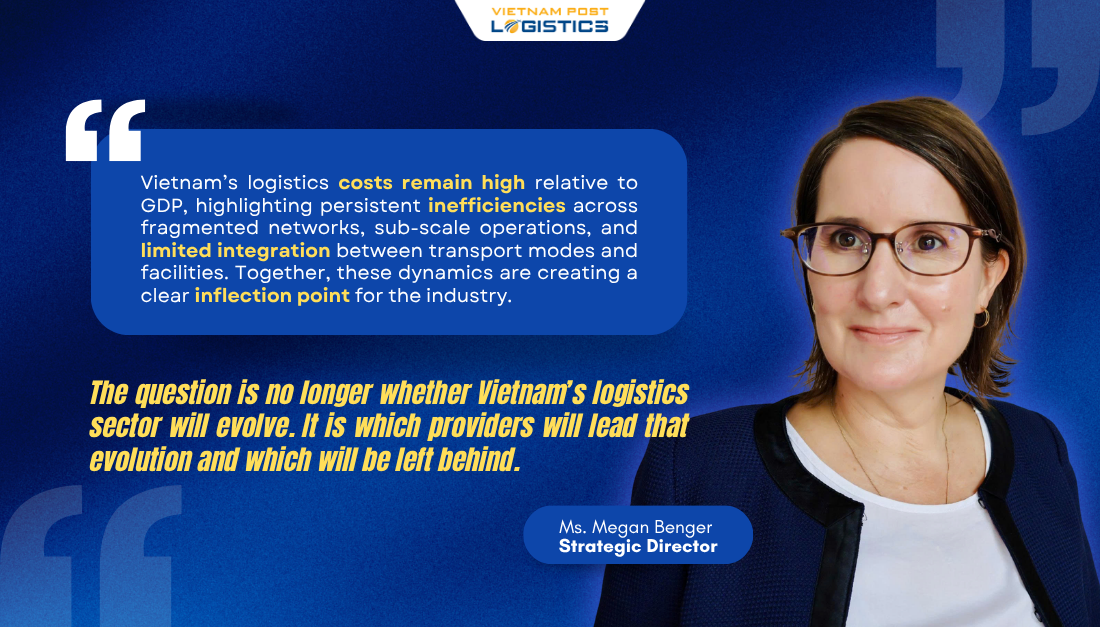
However, a paradox exists: logistics costs in Vietnam still account for a very high proportion of GDP. This reflects long-standing inadequacies in a fragmented operational network that still functions on a small scale, lacking integration between transport modes and infrastructure.
The synthesis of these factors is creating a clear turning point, forcing the entire industry to change its operational mindset. This is not just a challenge but a golden moment to restructure the modern supply chain ecosystem.
Why Is the Traditional Operating Model No Longer Effective?
The history of Vietnam’s logistics industry has revolved around specialized units in transportation, warehousing, and freight forwarding. These parties often operate independently, lacking cohesion within a shared ecosystem.
While this model once supported rapid growth, it has now revealed many limitations.
When integration is lacking, businesses will face:
-
Sub-optimal network design leading to overlap and wasted assets.
-
Low data visibility, causing difficulties in operational monitoring and inventory management.
-
Lack of connection between links, giving rise to costs and driving up total logistics expenses.
-
Inconsistent service quality, especially in areas outside city centers.
The consequences will not only stop at operational inefficiency but will directly reduce the competitive capacity of the enterprise.
For manufacturers and retailers, a disconnected system means an increased cost burden and slowness in adapting to market fluctuations.
From a macro perspective, these barriers are hindering Vietnam’s ability to extract surplus value from the wave of manufacturing growth and the boom of the consumer economy.
The New Race in the Logistics Industry – When Integrated Solutions Replace Single Services
These shifts are step-by-step fundamentally redefining the core elements a logistics service provider needs to maintain and enhance competitive capacity in the market.
Success in the new context no longer depends on providing single services but is increasingly tied to the ability to develop comprehensive integrated solutions (end-to-end). These solutions need to tightly connect transportation, distribution, cross-border logistics, fulfillment, and value-added services within a synchronous and unified operating model.
This is not just a story of expanding the service portfolio, but a strategic transformation process requiring:
-
Effective integration of national networks: This plays a role in connecting key economic zones with regional markets and rural areas.
-
Seamless coordination between transport modes: Creating conditions for the supply chain to operate flexibly, optimally, and with high adaptability.
-
Visibility and control based on digital platforms: Helping businesses optimize inventory, routing, and operational capacity in real-time.
-
Capacity to design comprehensive solutions: Allowing for the coordination of logistics activities that are appropriate and closely aligned with the supply chain strategy of each customer.
Specifically, providers possessing vast domestic networks and solid infrastructure platforms hold a superior advantage in assuming a deeper integration role, effectively connecting the first mile, middle mile, and last mile into a seamless and unified logistics ecosystem.
Which Barriers Are Holding Back the Domestic Supply Chain?
Although market demand has become clearer than ever, there remain significant barriers that need to be viewed realistically.
Infrastructure and network design are still in the completion phase, while the shortage of large-scale distribution centers at strategic locations, along with national networks that have not been synchronously coordinated, is significantly limiting overall operational efficiency.
The application of technology is also not uniform, especially among small-scale providers. This leads to limitations in data visibility as well as the level of integration between systems.
Besides, gaps in core capabilities still exist. To effectively deploy integrated logistics services, businesses need to possess new skill sets, particularly in areas such as solution design, network optimization, and data-driven operations.
Finally, traditional commercial models are inadvertently increasing the fragmentation of the market, as price structures mainly focus on individual services instead of aiming for the optimization of total outcomes (end-to-end).
To resolve these challenges, a coordinated and long-term approach is needed:
-
Continue focused investment in national logistics infrastructure as well as regional distribution centers.
-
Strongly promote the application of digital platforms and the building of integrated systems.
-
Develop the capacity to provide comprehensive service packages (end-to-end) professionally.
-
Transform commercial models toward value-based pricing instead of just relying on single services.
-
Strengthen close cooperation throughout the entire logistics ecosystem to create effective linkage and synergy.
Where Is the Opportunity for Logistics Service Providers in the New Era?
Shifting to an integrated logistics system is not merely a solution to complex market fluctuations but also opens up many important opportunities.
At the macro level, an integrated supply chain will directly pull down logistics costs, optimize operational performance, and increase the competitiveness of Vietnamese goods in the international arena.
For the business community, this transformation brings maximum flexibility in scaling up and exploring new markets, especially expanding deeper into regional areas.
For logistics service providers, this is a major step forward in the value chain, transitioning from a mindset of pure transaction execution to providing comprehensive strategic solutions.
More importantly, this trend lays the foundation for a comprehensive national logistics network, where all infrastructure and resources are exploited effectively on a national scale instead of just focusing on major cities.
What Does This Mean for Logistics Service Providers?
The question is no longer whether Vietnam’s logistics industry will continue to develop, but has shifted to a more strategic issue: who will lead this growth wave, and who will gradually be left behind.
In an increasingly deeply integrated market, the three key factors—scale, operational capacity, and connectivity—will become the decisive criteria to define the position of businesses.
Providers capable of effectively combining networks, operational capacity, and digital technology integration will gradually position themselves as strategic partners for manufacturers, retailers, and e-commerce enterprises in solving increasingly complex supply chain problems.
Conversely, businesses that do not keep up with this trend will face the risk of a shrinking role, being limited to low-profit-margin segments with high commodity characteristics, while the larger portion of the supply chain value gradually belongs to units capable of integration and creating comprehensive solutions.
Logistics Ecosystem – A Transformational Opportunity for Vietnamese Enterprises
Vietnam stands before a great opportunity to build one of the most dynamic and efficient logistics ecosystems in the region.
However, fully unlocking that potential will depend on the speed of transformation of the entire industry—from a fragmented market to an integrated model, from single transactions to providing comprehensive solutions, and from focusing only on scale to building truly connected and synchronous supply chains.
For service providers, the development roadmap is becoming clearer than ever. In the context of a constantly moving market, the key question now is which unit has enough courage to act and lead that change.
In fact, a new generation of providers has begun to invest heavily in integrated networks and end-to-end supply capabilities. The application of digital platforms is becoming a strategic “weapon” to manage high-complexity supply chains.
In that picture of transformation, Vietnam Post Logistics is gradually asserting its position by leveraging its nationwide infrastructure network, solid logistics capacity, and digital transformation initiatives to step-by-step assume a deeper integration role in the constantly moving and developing supply chain landscape of Vietnam.
This proactivity not only helps optimize the flow of goods but also contributes to reshaping the face of the national logistics system. The road ahead has opened, and those units ready to transform will be the masters of the future of Vietnam’s supply chain.
Bài viết liên quan
10 October, 2026
Southern Trucking Services: Relieving Peak Season Port and Airport Congestion
As the year-end peak season approaches, trading activity across Southern Vietnam’s key economic zone reaches record levels. Major seaport complexes like Cat Lai and Cai Mep – Thi Vai, alongside key air cargo gateways in the Ho Chi Minh City area, experience heavy inbound cargo flows to supply holiday production and distribution networks. However, revenue […]

10 October, 2026
Top 4 Trusted Warehousing Services in Nghe An (2026 Guide)
10 October, 2026
Top 4 Trusted Warehousing Services in Nghe An (2026 Guide)
The surge in Foreign Direct Investment (FDI) and the ongoing industrial shift in North Central Vietnam are rapidly transforming Nghe An into a key regional logistics hub. For major manufacturing, trading, and distribution enterprises (Key Accounts/FDI clients), finding a reputable provider of warehousing services in Nghe An with high technical standards to serve as a […]
4 October, 2026
Warehouse Rental in Nghe An: Strategic Solutions for Enterprise Supply Chains 2026
The surge in foreign direct investment (FDI) and manufacturing activity across North Central Vietnam is driving a strong demand among enterprise clients for large-scale storage space. However, finding a reliable warehouse rental in Nghe An that satisfies rigorous technical standards, offers optimal transportation connectivity, and provides professional operational capabilities to serve as a regional distribution […]
6 August, 2026
Hai Phong Yard Rental Service & Technical Standards Enterprises Need to Know
Currently, concerns about flooding during the stormy season, expensive DEM/DET penalty fees, and the shortage of standard off-dock buffer yards are creating immense pressure on the supply chain in Hai Phong. Perfectly meeting these strict requirements, the Hai Phong yard rental service by Vietnam Post Logistics provides a vast open yard space, high load-bearing foundation, […]
6 August, 2026
OPTIMAL SOLUTIONS FOR CONTAINER AND OPEN YARD STORAGE COSTS AT HAI PHONG GATEWAY
In the supply chain management problem at the Hai Phong gateway, choosing the wrong storage infrastructure can turn a profitable shipment into a loss due to storage fees. With main port yards constantly overloaded and indoor warehouses limited by both load capacity and height, the Off-Dock Open Yard model emerges as a perfect alternative solution. […]
15 July, 2026
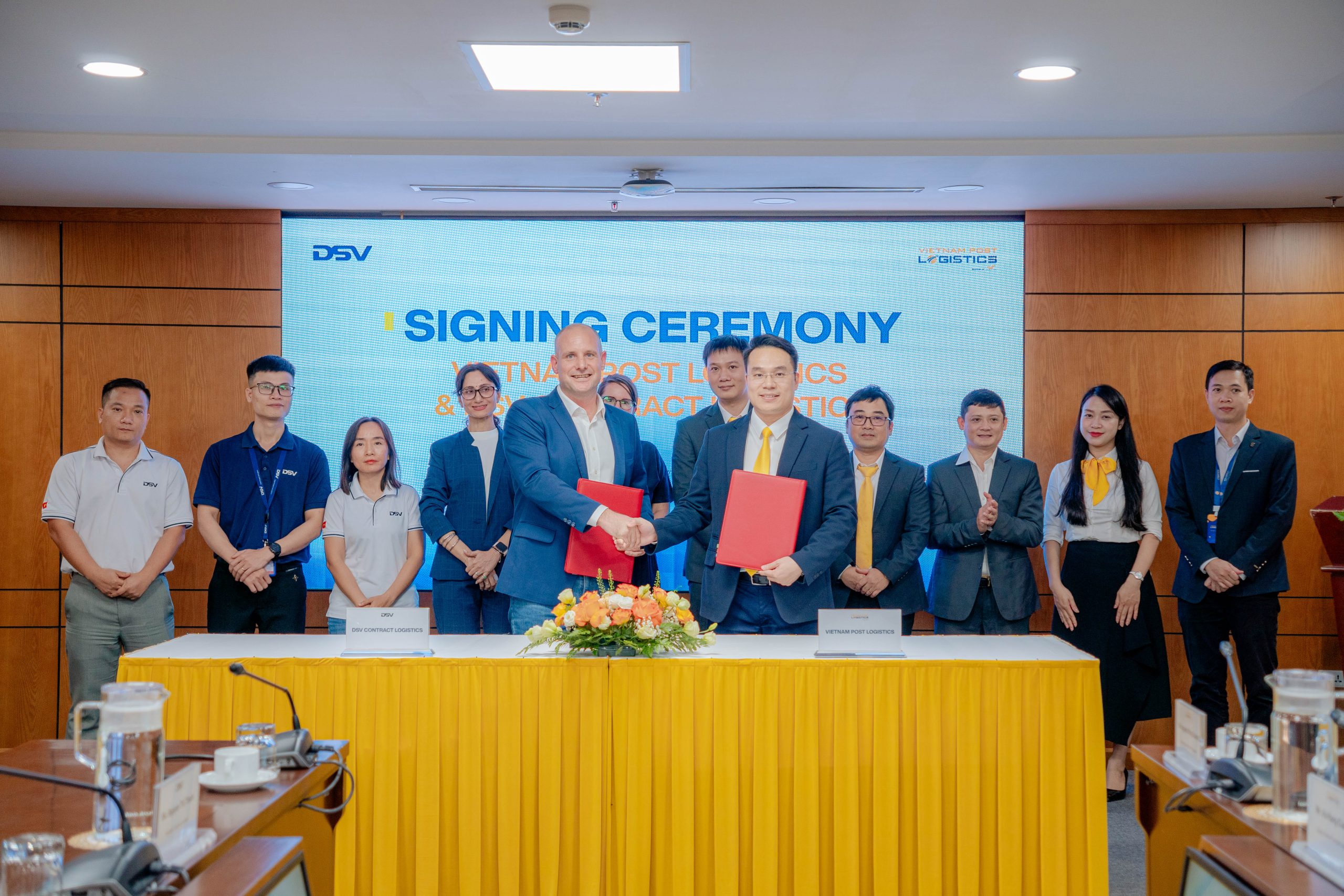
A Strategic Handshake Between Vietnam Post Logistics and DSV Contract Logistics (Vietnam): Pioneering the Future of B2B Supply Chains
On the afternoon of July 13, 2026, the Principal Contract Renewal Ceremony between Vietnam Post Logistics and DSV Contract Logistics (Vietnam) officially took place in a distinguished and proud atmosphere. This event attracted special attention, not only because of the scale of the two enterprises but also due to the profound impact of this partnership […]
11 June, 2026
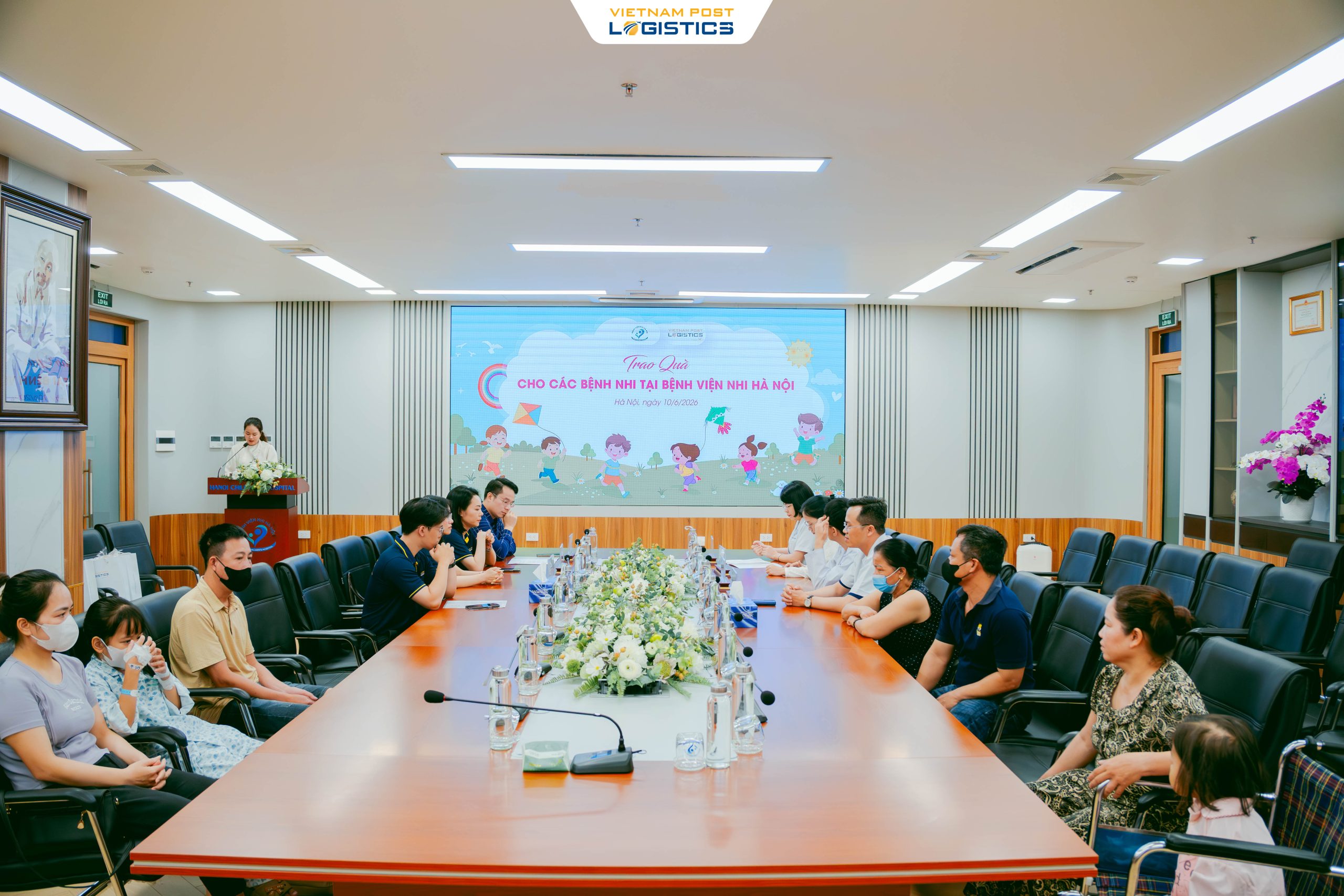
Vietnam Post Logistics Shares Love and Support with Pediatric Patients at Hanoi Children’s Hospital
In response to the Action Month for Children, representatives from the leadership and trade union of Vietnam Post Logistics recently paid a meaningful visit to Hanoi Children’s Hospital. The delegation extended encouragement and presented heartfelt gifts to young patients facing extremely difficult circumstances. This practical initiative is part of the company’s sustainable Corporate Social Responsibility […]