

.svg)




Vietnam Customs 2026: Regulatory Shifts and Business Implications for Foreign Enterprises
 Vietnam Post Logistics
 19 January, 2026
 5 phút đọc
Vietnam customs 2026 marks a structural turning point for foreign enterprises operating in Vietnam. After years of gradual policy updates, the customs and logistics environment has entered a phase where regulatory enforcement, data integration, and post-clearance controls are applied more strictly and consistently than before.
For foreign-invested enterprises (FDIs), Vietnam customs in 2026 is no longer just about clearing goods at the border. It has become a compliance-driven system that directly affects tax exposure, logistics efficiency, internal controls, and long-term operational stability.
This article provides an in-depth analysis of:
- How Vietnam’s customs and logistics environment has changed from 2025 to 2026
- Which regulatory and operational shifts matter most to foreign businesses
- The key challenges enterprises are facing
- Practical strategies to adapt and operate sustainably in Vietnam’s new compliance landscape
Vietnam Customs 2026: From Policy Issuance to Enforcement Reality
The End of the “Grace Period” Mentality
Throughout the early 2020s, Vietnam introduced numerous legal frameworks related to customs modernization, electronic documentation, tax administration, and risk-based inspection. In practice, however, enforcement across regions and agencies was often uneven.
By 2026, this gap is expected to have narrowed significantly.
Authorities are no longer focused on policy rollout—they are focused on compliance verification. This means:
- Less tolerance for informal practices
- Greater scrutiny of inconsistencies across systems
- Increased reliance on post-clearance audits rather than border inspections alone
For businesses accustomed to flexible interpretations or reliance on local customs brokers, this shift represents a fundamental change.
Data Integration as the Core Enforcement Tool
Vietnamese customs authorities are increasingly leveraging:
- Centralized electronic customs systems
- Cross-agency data sharing (customs, tax, banking, licensing bodies)
- Automated risk profiling based on historical data
As a result, errors that once went unnoticed—such as valuation discrepancies or inconsistent HS classifications—are now easier to detect, even months or years after goods have been cleared.
Key Regulatory Shifts in Vietnam Customs 2026
Electronic Documentation Requirements under Vietnam Customs 2026
In 2026, electronic records are no longer a convenience—they are a legal baseline.
Businesses are expected to maintain:
- Digitally consistent customs declarations
- Electronic tax payment records
- Verifiable links between contracts, invoices, shipping documents, and accounting data
Manual adjustments or post-hoc explanations are increasingly difficult to justify during inspections.
Tighter Controls on Tax Collection and Customs Receipts
Recent regulatory updates have reinforced:
- Traceability of tax and duty payments
- Accountability of parties involved in import-export transactions
- Clear responsibility for errors in declarations, even when third-party agents are involved
This has significant implications for FDIs that outsource customs clearance to logistics providers while maintaining limited internal oversight.
Increased Focus on Post-Clearance Audits
Rather than delaying shipments at the border, authorities now prefer:
- Clearing goods quickly
- Conducting detailed audits afterward
Post-clearance audits examine:
- HS code classification
- Customs valuation methods
- Country-of-origin declarations
- Internal pricing and intercompany transactions
For many foreign companies, the real risk now lies after clearance, not during it.
The Current Customs and Logistics Operating Reality in Vietnam
Customs Is No Longer Isolated from Business Operations
In 2026, customs compliance touches multiple internal functions:
- Procurement
- Logistics
- Finance and tax
- Production planning
- Legal and compliance
A declaration error is no longer a local issue—it may reflect weaknesses in internal controls or data governance.
Logistics Performance Is Directly Linked to Compliance Quality
Delays, additional inspections, or audits often stem from:
- Inconsistent shipment documentation
- Unclear responsibility between departments
- Misalignment between operational reality and declared information
Logistics efficiency now depends as much on information accuracy as on physical infrastructure.
Major Challenges for Foreign Enterprises under Vietnam Customs 2026
Rising Compliance Costs under Vietnam Customs 2026
Foreign enterprises entering Vietnam often underestimate the true cost of compliance.
In 2026, businesses increasingly need to invest in:
- ERP, WMS, and TMS systems that align with customs requirements
- Dedicated customs and trade compliance personnel
- External advisory services covering tax, customs, and logistics
For new investors, these costs are rarely fully accounted for during feasibility studies, leading to budget pressure and operational stress after market entry.
Latent Legal and Tax Risks That Surface During Audits
Customs-related risks often remain hidden until triggered by audits.
Common risk areas include:
- Incorrect HS code classification based on outdated interpretations
- Understated or inconsistent customs valuation
- Misapplied country-of-origin rules under FTAs
- Inadequate documentation for intercompany transactions
These issues may not cause immediate disruption, but can result in:
- Retroactive tax assessments
- Administrative penalties
- Increased inspection frequency in the future
Operational Disruption Due to Fragmented Internal Structures
Many enterprises still operate with siloed departments:
- Logistics teams focus on delivery speed
- Finance teams focus on cost control
- Customs brokers handle declarations independently
- Production teams prioritize output
In 2026, this fragmentation creates risk.
Customs compliance now requires these functions to operate as one integrated system. A breakdown in communication between departments can lead to regulatory exposure that extends far beyond the logistics function.
Why Foreign-Invested Enterprises Face Higher Exposure Than Local Firms
Reliance on Third-Party Intermediaries
FDIs often depend heavily on:
- Local customs brokers
- Freight forwarders
- Outsourced logistics providers
While these partners play a critical role, legal responsibility ultimately remains with the importing or exporting entity.
In 2026, authorities increasingly hold companies—not intermediaries—accountable for errors.
Gaps Between Global Policies and Local Implementation
Many multinational companies apply global compliance frameworks that:
- Do not fully align with Vietnam’s regulatory specifics
- Rely on assumptions from other markets
Local deviations, if not properly documented, can raise red flags during audits.
Increased Scrutiny of Transfer Pricing and Customs Valuation
For FDIs with intercompany trade:
- Customs valuation
- Transfer pricing
- Tax compliance
are no longer separate domains.
Authorities increasingly cross-check these areas, making inconsistent pricing policies a significant risk factor.
Strategic Responses to Vietnam Customs 2026 for Foreign Enterprises
Re-evaluating the Customs and Logistics Operating Model
Companies should reassess:
- Whether customs clearance is treated as a tactical task or a strategic function
- How responsibilities are distributed between internal teams and external partners
Clear ownership of compliance is essential.
Building Integrated Data and Documentation Flows
Successful enterprises align:
- Contracts
- Invoices
- Customs declarations
- Accounting records
- Logistics execution data
This alignment reduces audit risk and improves operational transparency.
Strengthening Internal Governance and Compliance Awareness
Training is no longer optional.
Key stakeholders—from procurement managers to logistics coordinators—must understand how their actions affect customs compliance.
Choosing Strategic Local Partners
In 2026, logistics providers are no longer just transporters.
The right partners:
- Understand regulatory implications
- Integrate logistics and compliance thinking
- Act as extensions of internal operations rather than external vendors
Vietnam Customs 2026: A Compliance Filter, Not a Crisis
Vietnam’s customs and logistics environment in 2026 is not inherently more hostile—but it is far more disciplined and data-driven.
This shift acts as a filter:
- Companies with integrated systems, clear governance, and strong local understanding will operate more efficiently
- Companies relying on outdated practices or fragmented structures will face increasing friction
For foreign-invested enterprises, the key question is no longer “Can we clear goods through customs?”
It is “Is our entire operating model aligned with Vietnam’s evolving compliance reality?”
Those who answer this question proactively will not only mitigate risk but also gain a competitive advantage in one of Asia’s most dynamic markets.
Bài viết liên quan
10 October, 2026
Southern Trucking Services: Relieving Peak Season Port and Airport Congestion
As the year-end peak season approaches, trading activity across Southern Vietnam’s key economic zone reaches record levels. Major seaport complexes like Cat Lai and Cai Mep – Thi Vai, alongside key air cargo gateways in the Ho Chi Minh City area, experience heavy inbound cargo flows to supply holiday production and distribution networks. However, revenue […]

10 October, 2026
Top 4 Trusted Warehousing Services in Nghe An (2026 Guide)
10 October, 2026
Top 4 Trusted Warehousing Services in Nghe An (2026 Guide)
The surge in Foreign Direct Investment (FDI) and the ongoing industrial shift in North Central Vietnam are rapidly transforming Nghe An into a key regional logistics hub. For major manufacturing, trading, and distribution enterprises (Key Accounts/FDI clients), finding a reputable provider of warehousing services in Nghe An with high technical standards to serve as a […]
4 October, 2026
Warehouse Rental in Nghe An: Strategic Solutions for Enterprise Supply Chains 2026
The surge in foreign direct investment (FDI) and manufacturing activity across North Central Vietnam is driving a strong demand among enterprise clients for large-scale storage space. However, finding a reliable warehouse rental in Nghe An that satisfies rigorous technical standards, offers optimal transportation connectivity, and provides professional operational capabilities to serve as a regional distribution […]
6 August, 2026
Hai Phong Yard Rental Service & Technical Standards Enterprises Need to Know
Currently, concerns about flooding during the stormy season, expensive DEM/DET penalty fees, and the shortage of standard off-dock buffer yards are creating immense pressure on the supply chain in Hai Phong. Perfectly meeting these strict requirements, the Hai Phong yard rental service by Vietnam Post Logistics provides a vast open yard space, high load-bearing foundation, […]
6 August, 2026
OPTIMAL SOLUTIONS FOR CONTAINER AND OPEN YARD STORAGE COSTS AT HAI PHONG GATEWAY
In the supply chain management problem at the Hai Phong gateway, choosing the wrong storage infrastructure can turn a profitable shipment into a loss due to storage fees. With main port yards constantly overloaded and indoor warehouses limited by both load capacity and height, the Off-Dock Open Yard model emerges as a perfect alternative solution. […]
15 July, 2026
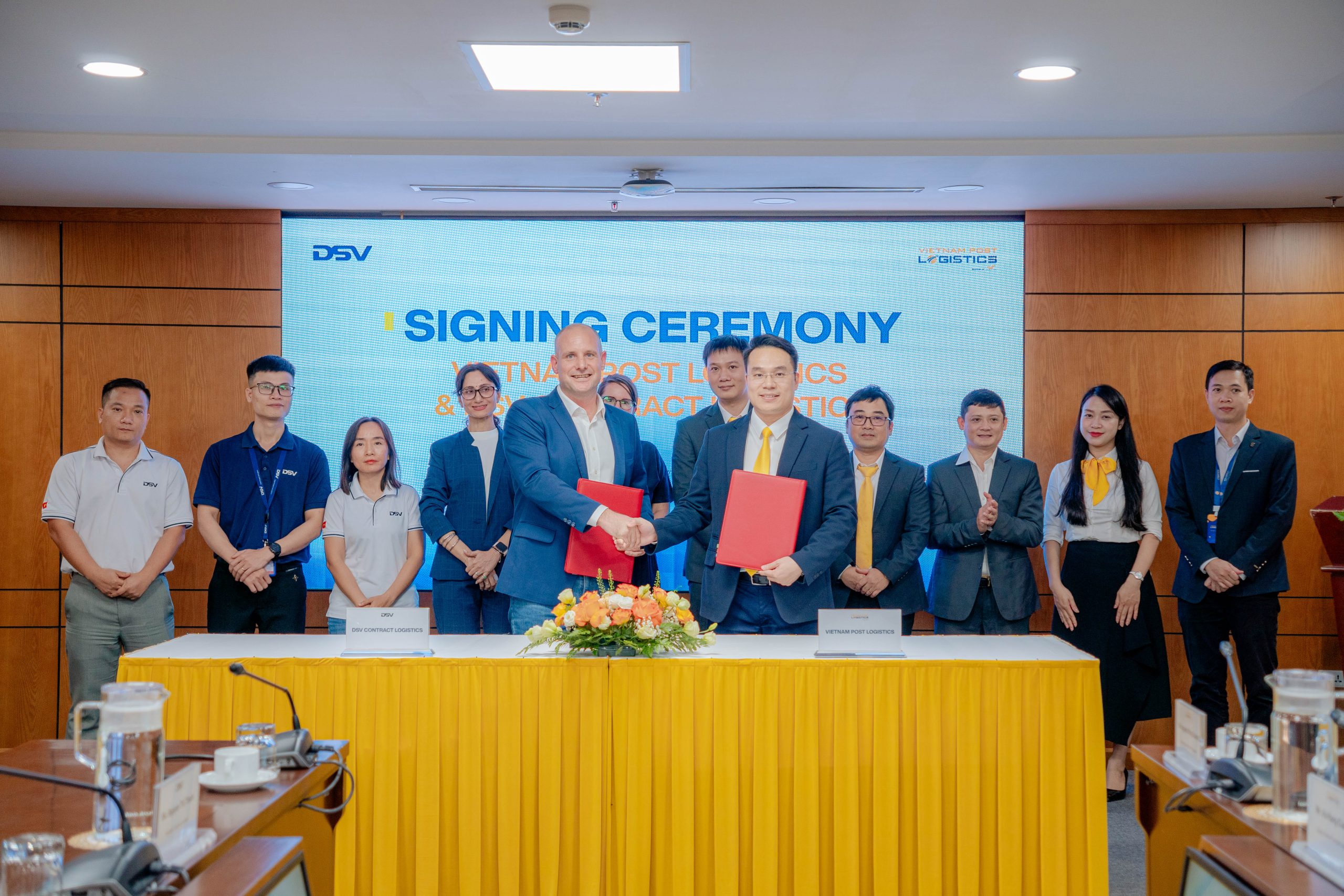
A Strategic Handshake Between Vietnam Post Logistics and DSV Contract Logistics (Vietnam): Pioneering the Future of B2B Supply Chains
On the afternoon of July 13, 2026, the Principal Contract Renewal Ceremony between Vietnam Post Logistics and DSV Contract Logistics (Vietnam) officially took place in a distinguished and proud atmosphere. This event attracted special attention, not only because of the scale of the two enterprises but also due to the profound impact of this partnership […]

11 June, 2026
Vietnam Post Logistics Shares Love and Support with Pediatric Patients at Hanoi Children’s Hospital
In response to the Action Month for Children, representatives from the leadership and trade union of Vietnam Post Logistics recently paid a meaningful visit to Hanoi Children’s Hospital. The delegation extended encouragement and presented heartfelt gifts to young patients facing extremely difficult circumstances. This practical initiative is part of the company’s sustainable Corporate Social Responsibility […]