

.svg)




Unlocking the Appeal of Dong Nai Industrial Parks – A New Growth Engine for Southern Vietnam’s Economic Hub
 Vietnam Post Logistics
 27 November, 2025
 5 phút đọc
When discussing the Southern Key Economic Region, most people think immediately of Ho Chi Minh City or Binh Duong. However, in recent years, Dong Nai has emerged as one of the most dynamic industrial provinces in Vietnam. With vast industrial land, rapidly improving infrastructure, and a continuous influx of FDI, Dong Nai’s industrial parks are entering a phase of strong expansion—becoming a “golden destination” for domestic and international manufacturers looking to invest, build factories, and develop logistics bases.
In particular, a series of major infrastructure projects—including Long Thanh International Airport, the Bien Hoa–Vung Tau Expressway, and Ho Chi Minh City’s Ring Road 3—are accelerating construction, helping Dong Nai evolve from a “satellite industrial zone” into a strategic import–export and logistics gateway for the entire Southeast region.
Overview of Dong Nai Industrial Parks Development
Industrial Expansion and FDI Landscape
According to Dong Nai’s Department of Planning and Investment, as of September 2025:
- The province has 37 approved industrial parks (IPs), the highest number in Vietnam, with 32 IPs already operational and an average occupancy rate of over 83%.
- By 2030, the number of IPs is expected to rise to 48.
- Total leasable industrial land reaches around 12,000 hectares, concentrated in Nhon Trach, Long Thanh, Trang Bom, and Bien Hoa.
- In the first nine months of 2025, Dong Nai attracted over USD 1.4 billion in FDI, ranking among the Top 5 nationwide. New investment primarily targets manufacturing, mechanical engineering, electronics, logistics, and warehouse infrastructure.
Several prominent industrial parks with high occupancy and strong investor attraction include:
- Long Thanh IP, Nhon Trach 3–5–6, Amata, Giang Dien, Ho Nai, An Phuoc, among others.
- New industrial parks undergoing land clearance—such as Long Duc 3, Ong Keo Expansion, and Phuoc Binh IP—are set to add hundreds to thousands of hectares to meet rising demand.
Export Growth – The Engine Driving Logistics & Warehouse Demand
In 2025, Dong Nai’s import–export sector maintained impressive growth:
- Export turnover (Jan–Oct 2025): USD 28.77 billion (+18.87%)
- Imports: USD 20.12 billion (+16.32%)
- Trade surplus: USD 8.6 billion
Key export categories include computers & electronics, textiles, footwear, wooden products, and processed agricultural goods.
Major export markets:
- U.S. (32%)
- Japan
- South Korea
- China
Rising production and exports naturally accelerate the need for logistics hubs, bonded warehouses, and distribution centers, prompting many logistics companies to expand their networks to Dong Nai.
Geographical Advantages & Regional Connectivity
Dong Nai possesses a “golden location” within the Southern Economic Region:
- Adjacent to Ho Chi Minh City, granting easy access to Cat Lai Port
- Close to Ba Ria–Vung Tau, home to the Cai Mep–Thi Vai deep-water port system
- Directly connected to Long Thanh International Airport, under construction, and targeted for operation in 2026
Major transport corridors—including Bien Hoa–Vung Tau Expressway, Ring Roads 3 & 4, and Dau Giay–Lien Khuong Expressway—position Dong Nai as a regional trade route, shortening transit times and reducing logistics costs.
Dong Nai’s Industrial Ecosystem – A Magnet for Investors & Logistics Growth
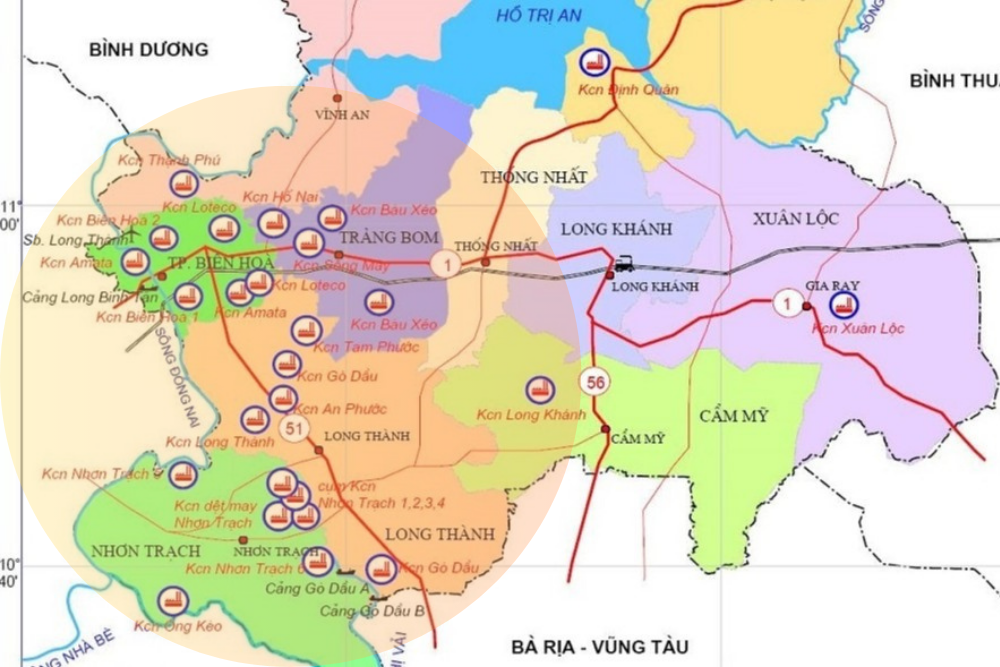
Dong Nai is one of Vietnam’s largest industrial hubs, with 37 operational IPs and 32 more planned for expansion. The average occupancy rate exceeds 83%, with several IPs already fully occupied—highlighting the province’s significant appeal to global manufacturers.
Notable industrial parks include:
Amata IP (Bien Hoa)
A model industrial park spanning over 700 ha, home to Japanese, Thai, and European investors in electronics, engineering, and food manufacturing. Strategically located near Bien Hoa City with direct access to Long Thanh–Dau Giay Expressway.
Long Duc IP (Long Thanh)
A 282-ha Vietnam–Japan joint venture attracting high-tech manufacturers. Long Duc 3 (launched in 2025) will provide additional land adjacent to Long Thanh Airport—ideal for airfreight and export logistics.
Nhon Trach 5–6–7 IP Cluster
Located along the Dong Nai River, enabling waterway connections to Cat Lai and Cai Mep–Thi Vai ports, and significantly reducing container transport costs.
Giang Dien – Bau Xeo – Dau Giay Cluster
A fast-growing zone in engineering, packaging, plastics, and food processing, connected to National Highway 1A and Dau Giay – Phan Thiet Expressway.
Logistics & Warehouse Demand Surge
From 2022–2024, Dong Nai’s logistics and warehouse capacity grew by over 30%, mostly in Long Thanh, Nhon Trach, and Trang Bom—key nodes connecting Ho Chi Minh City, Cat Lai Port, Long Thanh Airport, and Cai Mep–Thi Vai.
Growing FDI in supporting industries, electronics, and precision engineering also drives demand for modern warehouses, especially bonded warehouses and fulfillment centers.
Businesses increasingly seek storage solutions near industrial parks to reduce handling times and optimize inventory and transport costs.
New Investment Wave – A Powerful Growth Catalyst
In 2024, Dong Nai attracted USD 1.6 billion in new and expanded FDI. The province now hosts more than 1,550 valid FDI projects from 46 countries.
Key growth drivers include:
- Expanding expressway and logistics infrastructure
- Long Thanh Airport accelerating toward 2026 operations
- Policies promoting sustainable industrial development and green logistics
Logistics Infrastructure & Supporting Services
Dense industrial growth fuels strong demand for transportation, warehousing, and distribution services. The province is investing heavily in ICDs, logistics centers, and multimodal transport corridors, particularly the Long Thanh – Nhon Trach – Trang Bom axis.
This positions Dong Nai as a regional logistics hub, enabling businesses to establish end-to-end supply chains—from manufacturing to distribution.
Impact on the Warehouse & Logistics Market
Dong Nai is becoming a strategic transit point in Southeast Vietnam, supported by expressways, ports, and the future Long Thanh Airport.
Key market trends include:
1. Rising warehouse demand
Driven by growth in auxiliary manufacturing, electronics, plastics, food processing, and furniture. Warehouses along Highway 51 and Long Thanh–Dau Giay often reach 90–95% occupancy.
2. Shift toward modern warehouse models
Smart warehouses, cold storage, and e-commerce fulfillment centers are gaining traction, with strong investment from Japan, Korea, and Singapore.
3. Growth of multimodal logistics
Connectivity to highways, deep-water ports, and airports enables seamless production–storage–export cycles, unlocking strong demand for bonded warehouses and cross-border logistics.
4. Provincial policies promoting logistics hubs
Dong Nai plans 7 regional logistics centers by 2030, offering tax incentives, streamlined administrative procedures, and industrial–logistics integration.
Future Outlook of Dong Nai’s Industrial Ecosystem
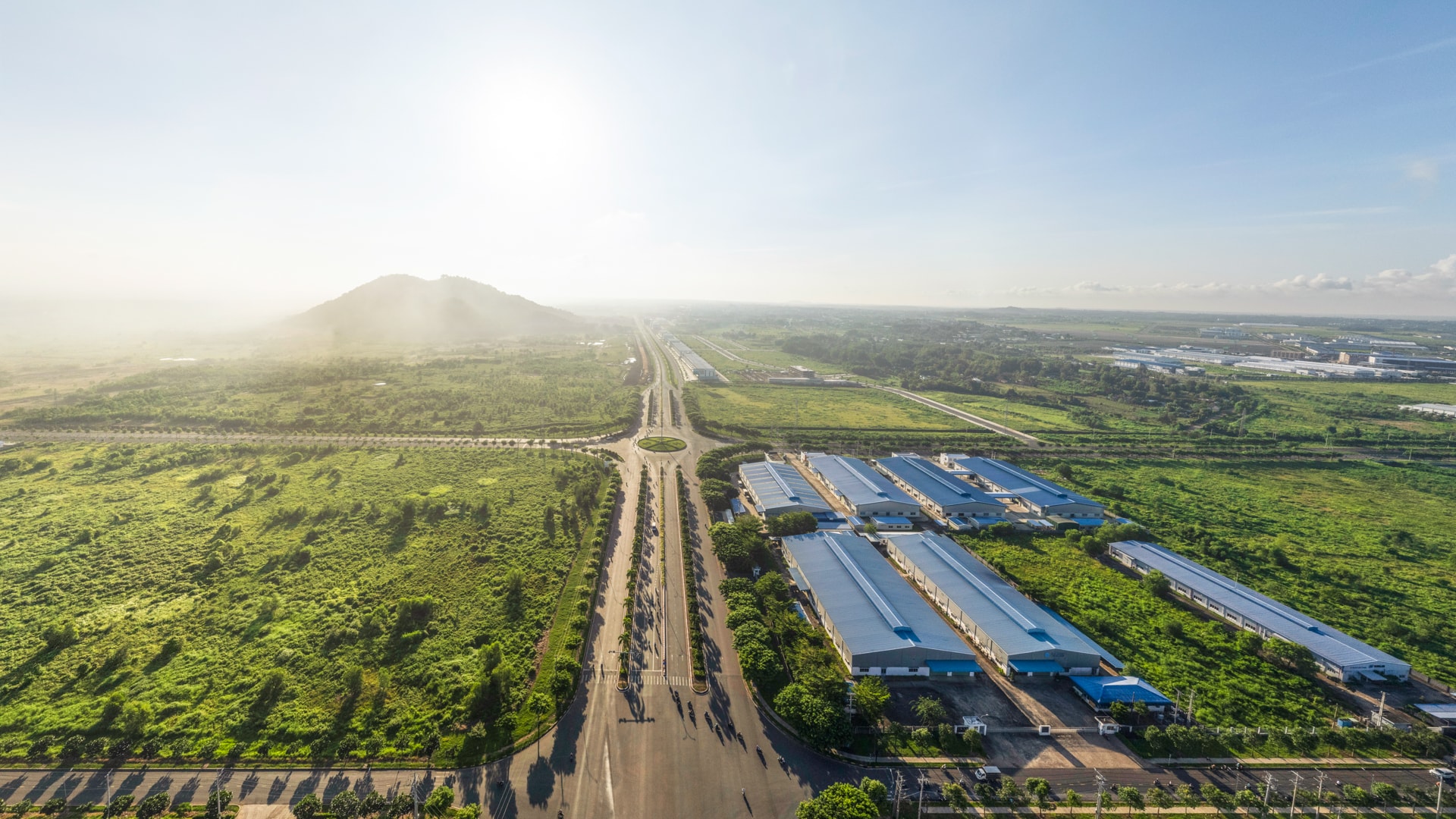
Dong Nai is entering a new industrial development phase—shifting from traditional manufacturing to integrated, high-tech, and sustainable industrial logistics ecosystems.
Four major trends will shape the future:
1. Land planning optimized for supply chain clusters
Industrial parks are increasingly linked into connected clusters (Long Thanh – Nhon Trach – Bien Hoa – Trang Bom), enabling seamless production and logistics.
2. Strong investment in multimodal connectivity
Key projects—Long Thanh Airport, Bien Hoa–Vung Tau Expressway, Ring Roads 3–4, and Phuoc An Port—will form the backbone of regional logistics.
3. FDI shifts to satellite provinces
As land in HCMC and Binh Duong becomes limited, investors pivot to Dong Nai, boosting high-tech, clean energy, advanced manufacturing, and logistics services.
4. Green transition & logistics digitalization
Eco-industrial standards, renewable energy, IoT-based warehouse management, and TMS systems will define the next development phase.
Dong Nai is transforming from a traditional industrial province into a major logistics and manufacturing hub of Southern Vietnam. The integration of planning, infrastructure, capital flows, and technology is creating a closed-loop growth model—where logistics plays a pivotal role.
By 2030, Dong Nai is expected to be not only an attractive destination for industrial investors but also a strategic node in Vietnam’s and ASEAN’s logistics networks.
Có thể bạn sẽ thích?
- Since 2026: Why Every Shipment, Even the Smallest, Requires Customs Declaration?
- Vietnam Post Logistics Implements 2026 Development Plan and Summarizes Trade Union Activities 2025
- Vietnam Post Logistics & PNS Network Vina – Expand Strategic Partnership to Strengthen Logistics Capabilities in Vietnam
Bài viết liên quan

2 February, 2026
Since 2026: Why Every Shipment, Even the Smallest, Requires Customs Declaration?
Entering 2026, the customs environment in Vietnam has crossed a significant threshold. For years, “buffer zones” existed—especially for low-value goods, express shipments, and small-scale e-commerce. However, from 2026, Customs Declaration 2026 has become a mandatory requirement for every package crossing the border. This change is not just an isolated administrative decision; it reflects a fundamental […]

2 February, 2026
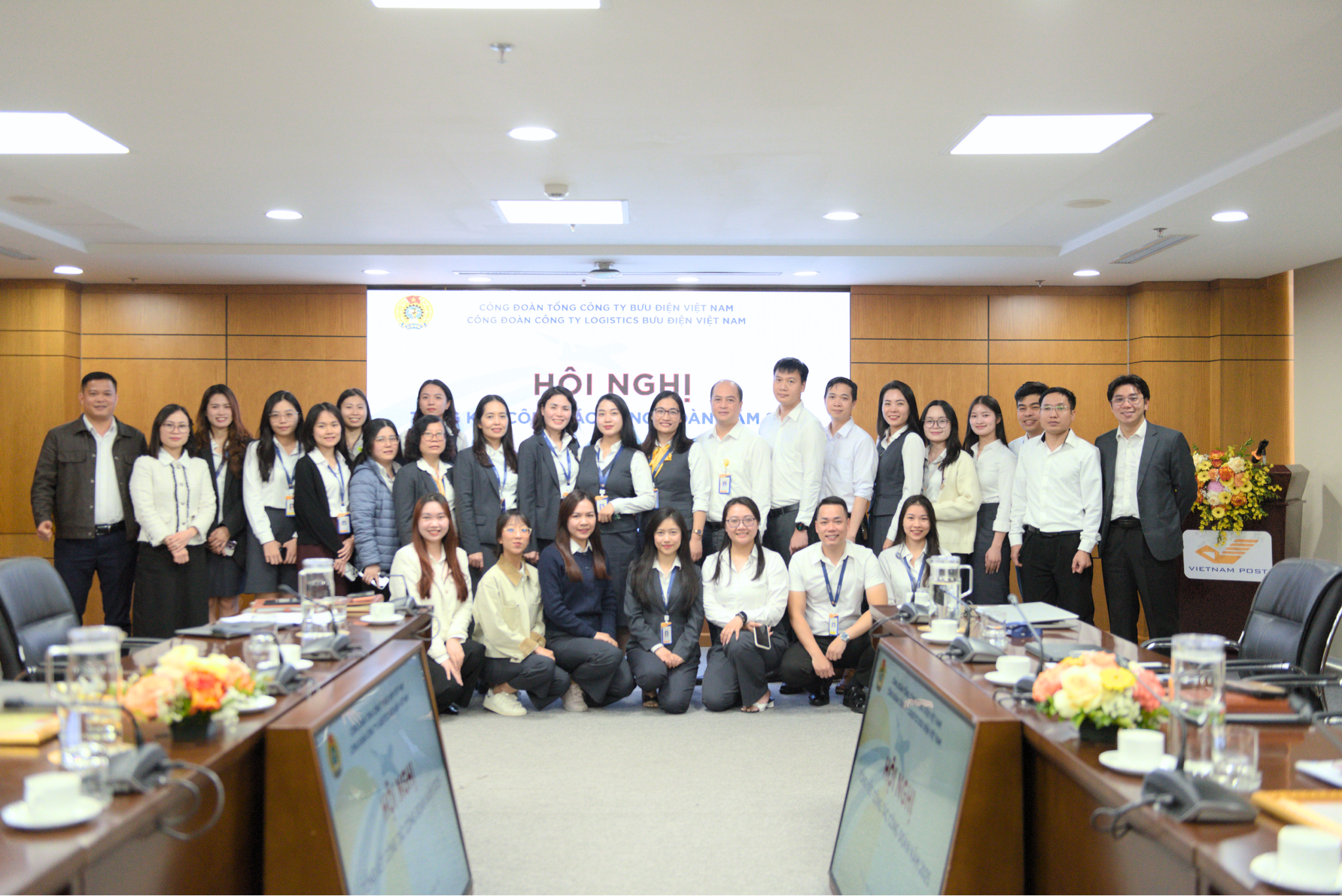
Vietnam Post Logistics Implements 2026 Development Plan and Summarizes Trade Union Activities 2025
On January 29, 2026, in the vibrant atmosphere of the early days of the Lunar New Year, Vietnam Post Logistics successfully organized the 2026 Development Plan Implementation Conference, combined with the 2025 Trade Union Performance Review. The conference was held in a hybrid format, connecting the headquarters with regional branches nationwide, bringing together management and employees […]
27 January, 2026
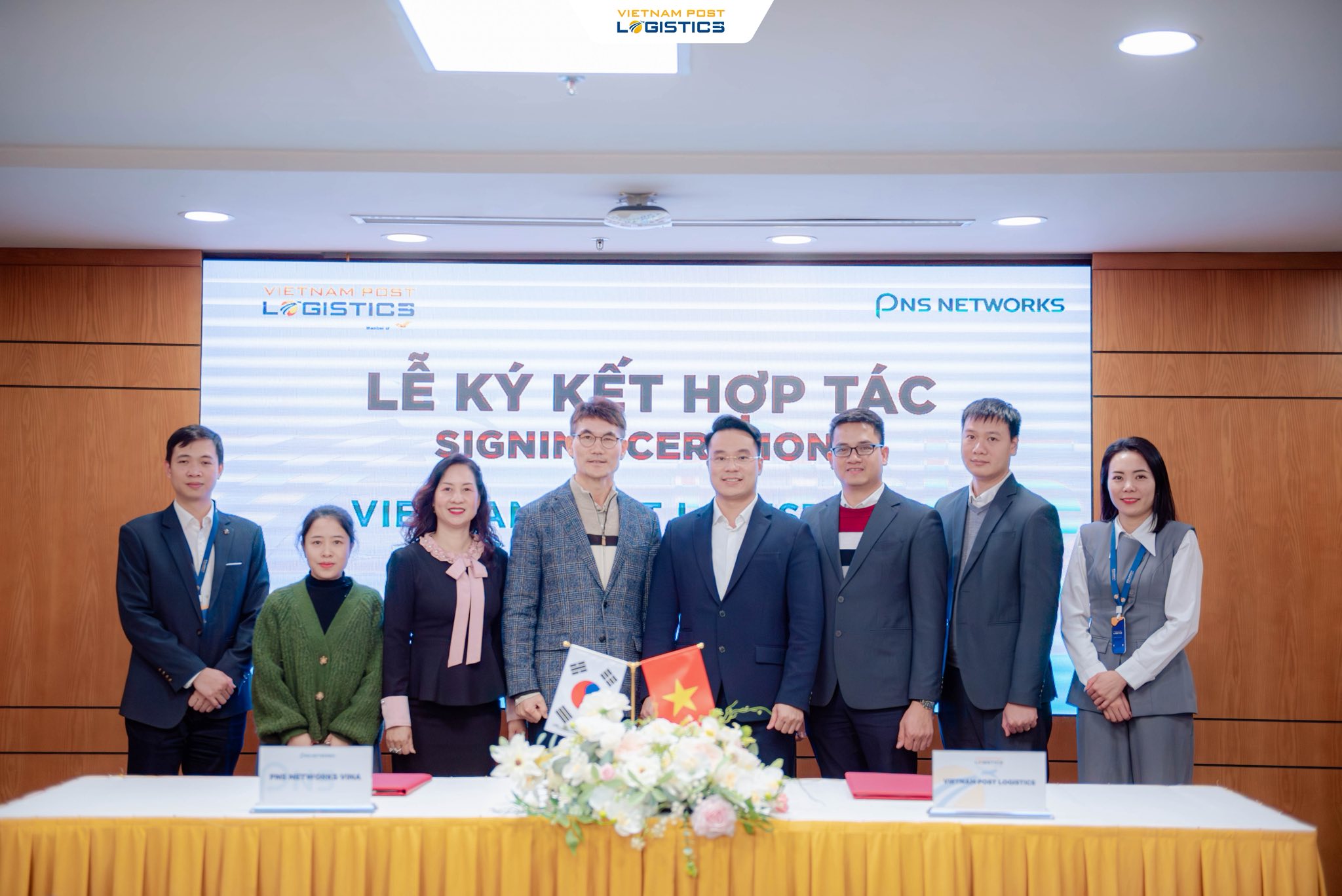
Vietnam Post Logistics & PNS Network Vina – Expand Strategic Partnership to Strengthen Logistics Capabilities in Vietnam
Amid the strong restructuring of global supply chains, logistics service providers are facing increasing pressure to enhance flexibility, connectivity, and operational efficiency. In this context, strategic cooperation between domestic and international logistics companies has become a key driver for sustainable growth and competitiveness. On January 22, 2026, Vietnam Post Logistics and PNS Network Vina officially […]
19 January, 2026
Vietnam Customs 2026: Regulatory Shifts and Business Implications for Foreign Enterprises
Vietnam customs 2026 marks a structural turning point for foreign enterprises operating in Vietnam. After years of gradual policy updates, the customs and logistics environment has entered a phase where regulatory enforcement, data integration, and post-clearance controls are applied more strictly and consistently than before. For foreign-invested enterprises (FDIs), Vietnam customs in 2026 is no […]
12 December, 2025
Renting Warehouses in Đồng Nai: Rental Costs, Warehouse Types & Latest 2025 Guide for Businesses
Over the last three years, Đồng Nai has emerged as the “logistics capital of Southern Vietnam”, driven by rapid industrial park development and its strategic location near major seaports and newly built expressways. This has led to a significant increase in demand for warehouse rental in Đồng Nai, especially from manufacturing, trading, and import–export enterprises. […]
11 December, 2025
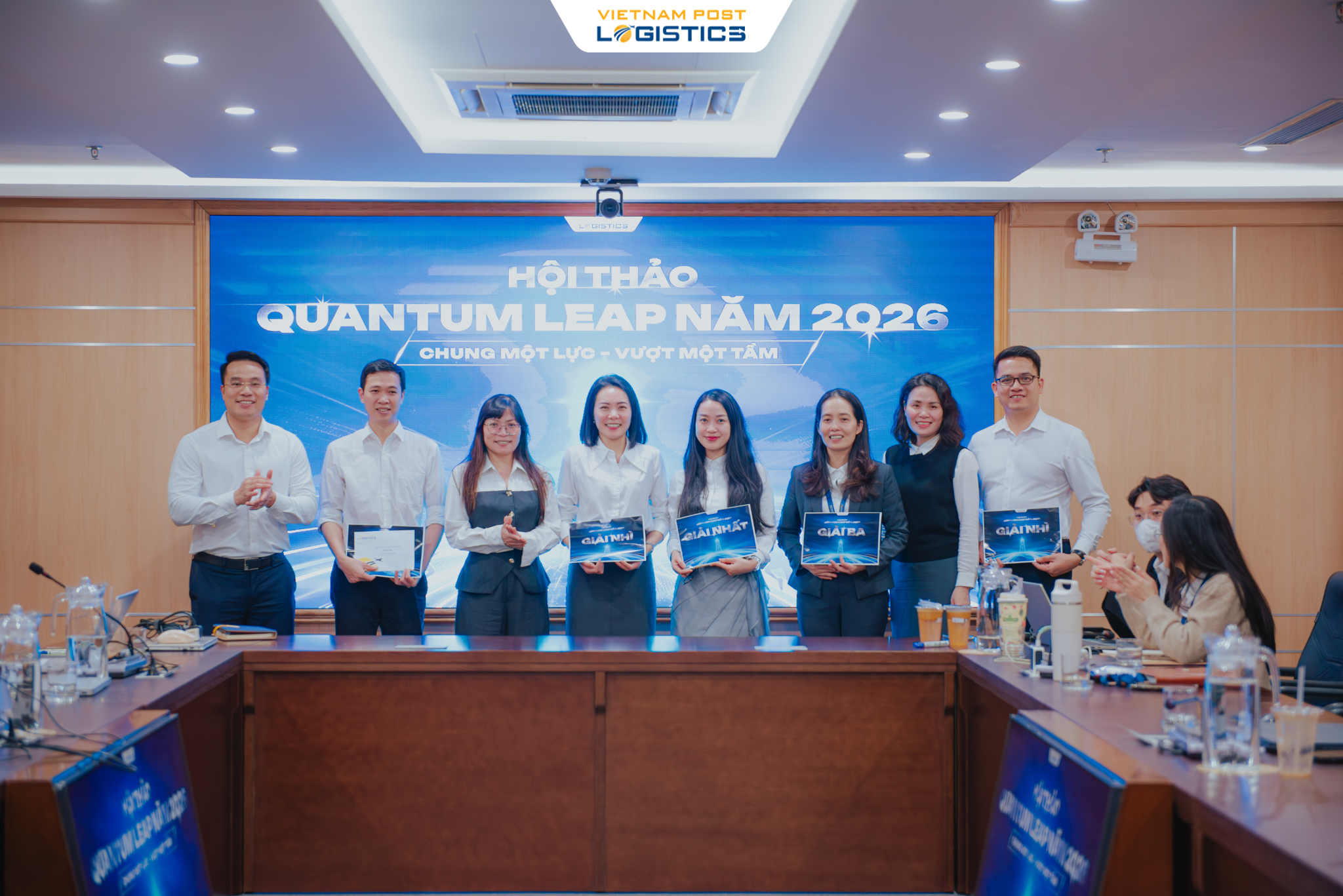
Quantum Leap 2026 Conference – A Strategic Breakthrough for Vietnam Post Logistics
Recently, Vietnam Post Logistics successfully organized the “Quantum Leap 2026 – Unified Strength, Elevated Vision” conference, bringing together department heads, core specialists, and key personnel across various divisions to identify breakthrough directions for 2026. This event marked an important milestone during the Company’s acceleration phase of transformation, operational optimization, and expansion of its strategic business […]
11 December, 2025
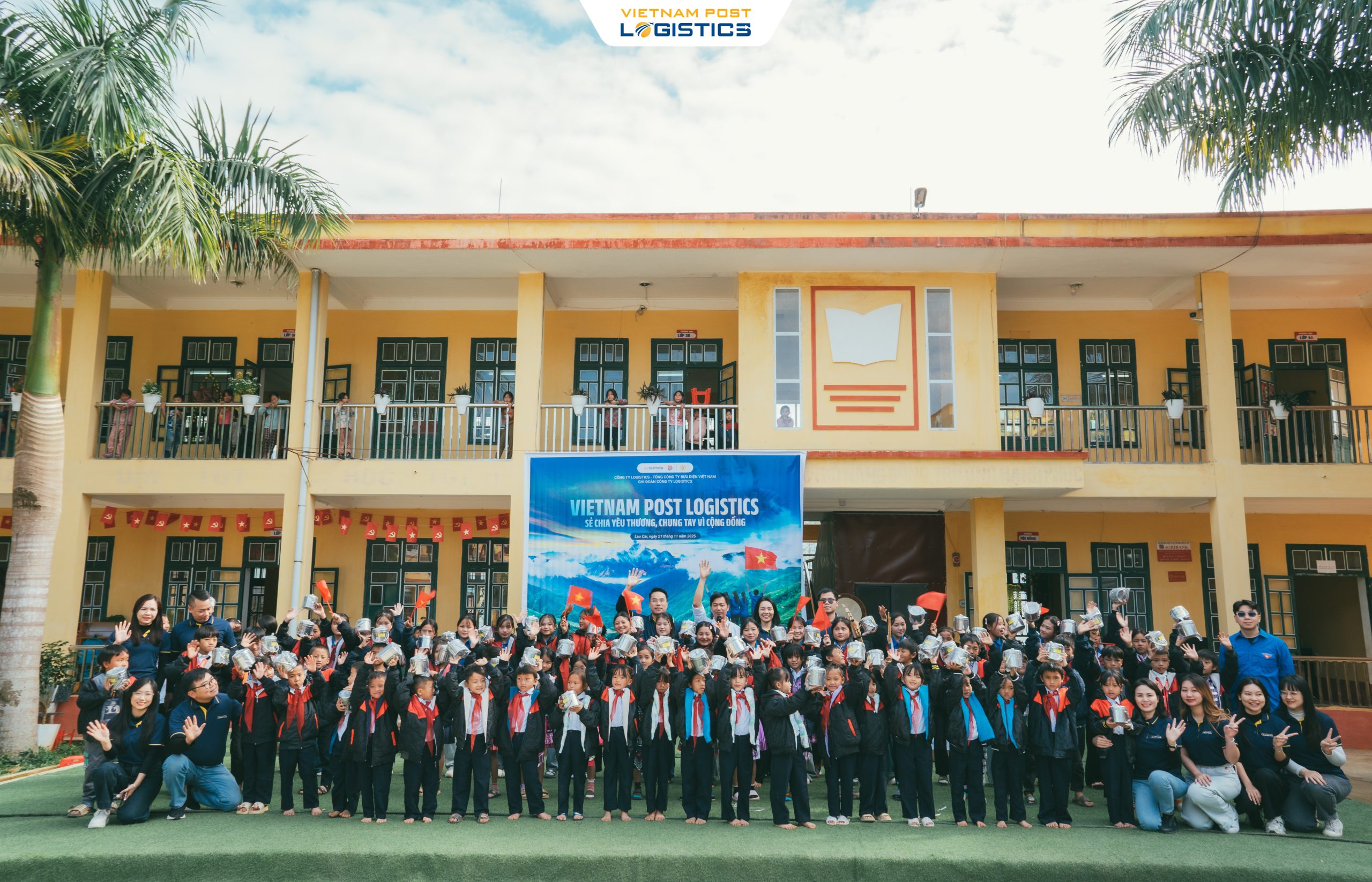
Charity Program “Journey from the Heart – Accompanying Mountainous Communities” at Son Luong Commune, Lao Cai Province
As part of our recent charity activities, Vietnam Post Logistics embarked on a meaningful journey to Trung Hoc & Tieu Hoc Sùng Đô School in Son Luong Commune, Lao Cai Province — a highland school that still faces many difficulties yet is filled with resilience and an admirable spirit of learning among its students. Spreading […]